Class 3 Heinemann Explore Science Workbook 3, 2nd Ed. (2027-28)
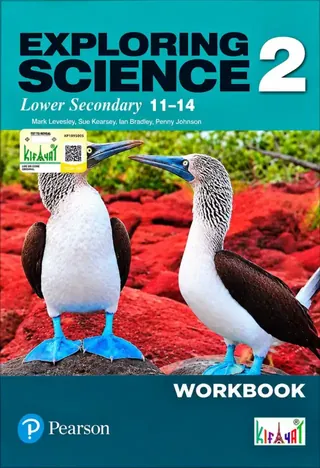
Heinemann Explore Science Workbook, Grade 3, Second Edition (Pearson, with the Kifayat logo) for Class 3 in session 2027-28: 76 worksheets in six units on living and growing, plants, materials, rocks and soils, magnets and springs, and friction.
Key details
- Class 3 · Science workbook
- Pearson · Second Edition
- 76 worksheets · 6 units
- Session 2027-28
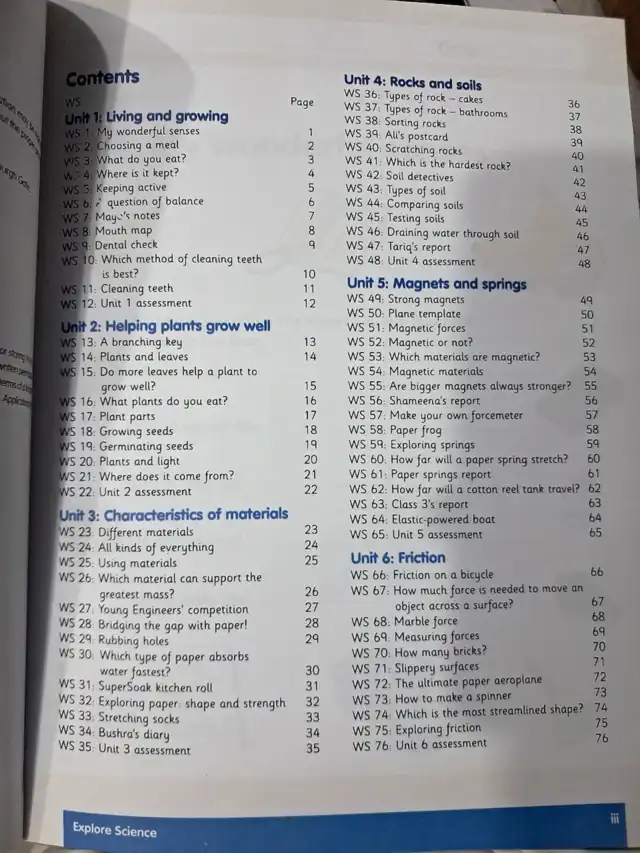
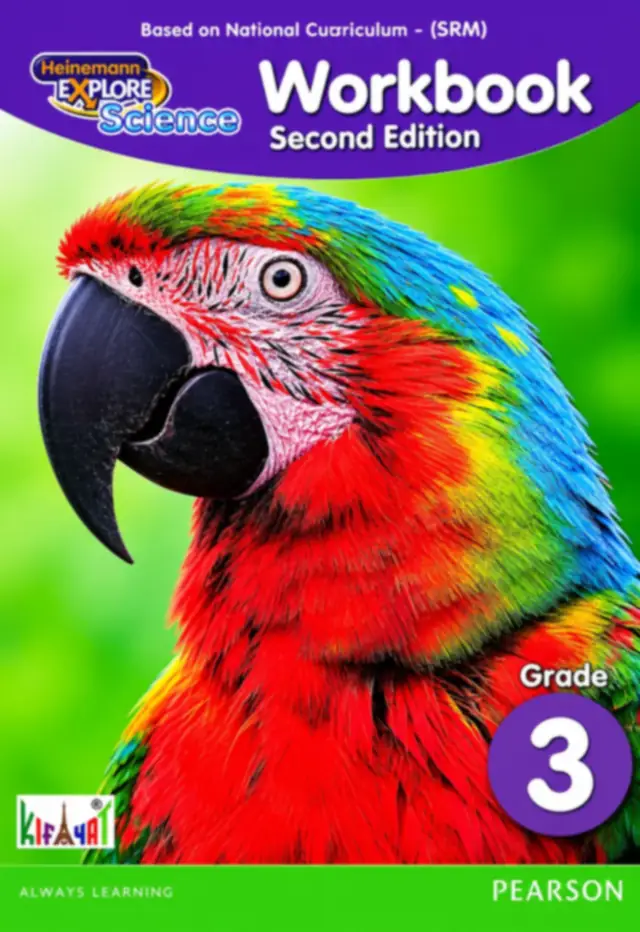
Heinemann Explore Science Workbook 3 (Second Edition) is the Grade 3 science workbook from Pearson, printed with the line "Based on National Curriculum – (SRM)" and the Kifayat logo. Its contents list 76 worksheets, one on each page, in six units: Living and growing, Helping plants grow well, Characteristics of materials, Rocks and soils, Magnets and springs and Friction. This page is for the 2027-28 session and for Class 3. Exam Book House, Shop Number 4, Al Fazal Market, Urdu Bazar, Lahore, supplies it with cash on delivery across Pakistan and delivery to the Gulf countries.
Quick facts
- Title on the cover: Heinemann Explore Science, Workbook, Second Edition, Grade 3
- Publisher: Pearson ("Always learning" on the cover); the Kifayat logo is at the bottom left
- Curriculum line on the cover: Based on National Curriculum – (SRM)
- Worksheets: 76, numbered WS 1 to WS 76, one per page
- Units: 6, each ending with a "Unit assessment" worksheet
- Largest unit: Unit 5, Magnets and springs, 17 worksheets (pages 49 to 65)
- Cover picture: a close-up of a macaw's head
- Shown on: School Books → Class 3
- Session: 2027-28
A workbook built for investigation
This is not a book of facts to copy. Many worksheet titles are questions to test: Do more leaves help a plant to grow well? (WS 15), Which type of paper absorbs water fastest? (WS 30), Are bigger magnets always stronger? (WS 55), How far will a paper spring stretch? (WS 60), Which is the most streamlined shape? (WS 74). A child who works through them practises the steps of a simple experiment: ask a question, predict, test, measure and report.
Several worksheets carry a name, which suggests a pupil's own notes or report: Maya's notes (WS 7), Ali's postcard (WS 39), Tariq's report (WS 47), Shameena's report (WS 56), Class 3's report (WS 63) and Bushra's diary (WS 34). Others are making tasks, such as Make your own forcemeter (WS 57), Paper frog (WS 58), Elastic-powered boat (WS 64) and How to make a spinner (WS 73).
All 76 worksheets, with their pages
| Unit | Worksheet | Page |
|---|---|---|
| Unit 1: Living and growing | ||
| WS 1: My wonderful senses | 1 | |
| WS 2: Choosing a meal | 2 | |
| WS 3: What do you eat? | 3 | |
| WS 4: Where is it kept? | 4 | |
| WS 5: Keeping active | 5 | |
| WS 6: A question of balance | 6 | |
| WS 7: Maya's notes | 7 | |
| WS 8: Mouth map | 8 | |
| WS 9: Dental check | 9 | |
| WS 10: Which method of cleaning teeth is best? | 10 | |
| WS 11: Cleaning teeth | 11 | |
| WS 12: Unit 1 assessment | 12 | |
| Unit 2: Helping plants grow well | ||
| WS 13: A branching key | 13 | |
| WS 14: Plants and leaves | 14 | |
| WS 15: Do more leaves help a plant to grow well? | 15 | |
| WS 16: What plants do you eat? | 16 | |
| WS 17: Plant parts | 17 | |
| WS 18: Growing seeds | 18 | |
| WS 19: Germinating seeds | 19 | |
| WS 20: Plants and light | 20 | |
| WS 21: Where does it come from? | 21 | |
| WS 22: Unit 2 assessment | 22 | |
| Unit 3: Characteristics of materials | ||
| WS 23: Different materials | 23 | |
| WS 24: All kinds of everything | 24 | |
| WS 25: Using materials | 25 | |
| WS 26: Which material can support the greatest mass? | 26 | |
| WS 27: Young Engineers' competition | 27 | |
| WS 28: Bridging the gap with paper! | 28 | |
| WS 29: Rubbing holes | 29 | |
| WS 30: Which type of paper absorbs water fastest? | 30 | |
| WS 31: SuperSoak kitchen roll | 31 | |
| WS 32: Exploring paper: shape and strength | 32 | |
| WS 33: Stretching socks | 33 | |
| WS 34: Bushra's diary | 34 | |
| WS 35: Unit 3 assessment | 35 | |
| Unit 4: Rocks and soils | ||
| WS 36: Types of rock – cakes | 36 | |
| WS 37: Types of rock – bathrooms | 37 | |
| WS 38: Sorting rocks | 38 | |
| WS 39: Ali's postcard | 39 | |
| WS 40: Scratching rocks | 40 | |
| WS 41: Which is the hardest rock? | 41 | |
| WS 42: Soil detectives | 42 | |
| WS 43: Types of soil | 43 | |
| WS 44: Comparing soils | 44 | |
| WS 45: Testing soils | 45 | |
| WS 46: Draining water through soil | 46 | |
| WS 47: Tariq's report | 47 | |
| WS 48: Unit 4 assessment | 48 | |
| Unit 5: Magnets and springs | ||
| WS 49: Strong magnets | 49 | |
| WS 50: Plane template | 50 | |
| WS 51: Magnetic forces | 51 | |
| WS 52: Magnetic or not? | 52 | |
| WS 53: Which materials are magnetic? | 53 | |
| WS 54: Magnetic materials | 54 | |
| WS 55: Are bigger magnets always stronger? | 55 | |
| WS 56: Shameena's report | 56 | |
| WS 57: Make your own forcemeter | 57 | |
| WS 58: Paper frog | 58 | |
| WS 59: Exploring springs | 59 | |
| WS 60: How far will a paper spring stretch? | 60 | |
| WS 61: Paper springs report | 61 | |
| WS 62: How far will a cotton reel tank travel? | 62 | |
| WS 63: Class 3's report | 63 | |
| WS 64: Elastic-powered boat | 64 | |
| WS 65: Unit 5 assessment | 65 | |
| Unit 6: Friction | ||
| WS 66: Friction on a bicycle | 66 | |
| WS 67: How much force is needed to move an object across a surface? | 67 | |
| WS 68: Marble force | 68 | |
| WS 69: Measuring forces | 69 | |
| WS 70: How many bricks? | 70 | |
| WS 71: Slippery surfaces | 71 | |
| WS 72: The ultimate paper aeroplane | 72 | |
| WS 73: How to make a spinner | 73 | |
| WS 74: Which is the most streamlined shape? | 74 | |
| WS 75: Exploring friction | 75 | |
| WS 76: Unit 6 assessment | 76 |
The six units at a glance
| Unit | Worksheets | Pages | Number of worksheets |
|---|---|---|---|
| Unit 1: Living and growing | WS 1 to 12 | 1–12 | 12 |
| Unit 2: Helping plants grow well | WS 13 to 22 | 13–22 | 10 |
| Unit 3: Characteristics of materials | WS 23 to 35 | 23–35 | 13 |
| Unit 4: Rocks and soils | WS 36 to 48 | 36–48 | 13 |
| Unit 5: Magnets and springs | WS 49 to 65 | 49–65 | 17 |
| Unit 6: Friction | WS 66 to 76 | 66–76 | 11 |
What children practise, unit by unit
- Unit 1 – Living and growing (12 worksheets). The senses, healthy food choices, keeping active, balance and looking after teeth. It ends with a teeth-cleaning comparison (WS 10 and 11), which is a good example of a fair test at home: does a different cleaning method change the result?
- Unit 2 – Helping plants grow well (10 worksheets). Sorting plants with a branching key (WS 13), then leaves, plant parts, seeds and light, and a closing question about where plant foods come from (WS 21).
- Unit 3 – Characteristics of materials (13 worksheets). Different materials and their uses, then a run of paper investigations: strength, absorbency and a bridge challenge (WS 28 Bridging the gap with paper!).
- Unit 4 – Rocks and soils (13 worksheets). Types of rock (two worksheets, WS 36 and 37, with "cakes" and "bathrooms" in their titles), sorting, scratching and hardness tests (WS 38 to 41), then soil: types, comparing, testing and draining.
- Unit 5 – Magnets and springs (17 worksheets). Magnetic and non-magnetic materials, comparing the strength of magnets, building a forcemeter and a paper spring, and a final assessment (WS 65).
- Unit 6 – Friction (11 worksheets). Friction on a bicycle (WS 66) and on different surfaces, marble force, measuring forces, streamlined shapes and a paper aeroplane challenge (WS 72).
How to use the workbook
- One worksheet, one sitting. A worksheet is one page, so keep each to 15 or 20 minutes.
- Predict before you test. Ask your child "what do you think will happen?" and write the answer before the experiment.
- Test one thing at a time. The idea of a fair test (change one thing, keep the rest the same) is the heart of this book.
- Measure and record. Use a ruler, a measuring jug or a stopwatch if one is available, and write the numbers in the table.
- Check with the assessment worksheets (WS 12, 22, 35, 48, 65 and 76) at the end of each unit.
Home ideas (not part of the book)
- Compare two kinds of tissue paper to see which one soaks up water faster.
- Collect three different stones on a walk and scratch them against each other.
- Use a fridge magnet and a few coins to find out which things stick.
- Slide a toy car down a board covered with cloth, paper and foil, and see how far it goes each time.
For session 2027-28
With 76 worksheets in a school year, about two worksheets a week would cover the whole workbook in around 38 weeks. Your teacher may choose which investigations to do in class and which to give as homework. Lists can change from year to year, so check your school's 2027-28 Class 3 list, and send it on WhatsApp if you want us to match it. We supply the newest edition we can get.
Matching and similar books
- Class 4 Heinemann Explore Science Workbook 4, Class 2 Heinemann Explore Science Workbook 2 and Class 1 Heinemann Explore Science Workbook 1 are the other years of the same workbook series.
- Class 3 Oxford The Science Factor 3 and Class 3 Cambridge Primary Science Learner's Book 3 are Class 3 science books from other publishers; use the one on your child's list.
Buy it in Urdu Bazar, Lahore
- Shop: Exam Book House, Shop Number 4, Al Fazal Market, Urdu Bazar, Lahore 54000
- Urdu Bazar Lahore book shop number: 0317 4846676 (call or WhatsApp)
- Open: Monday to Saturday, 9 AM – 9 PM; closed on Sunday
- Delivery: all over Pakistan with cash on delivery, and to the Gulf countries
People also search for this book as
heinemann explore science workbook 3 · explore science grade 3 workbook second edition · pearson science workbook class 3 · kifayat explore science grade 3 · class 3 science workbook lahore · heinemann science class 3 · urdu bazar lahore school books · session 2027-28
Frequently asked questions
Is this the Class 3 science workbook for session 2027-28?
It is the Heinemann Explore Science Workbook for Grade 3, Second Edition from Pearson. If your school's 2027-28 Class 3 list names it, this is the right book. Send the list on WhatsApp and we will check it.
How many worksheets and units does it have?
Seventy-six worksheets in six units, one per page.
Which unit has the most worksheets?
Unit 5, Magnets and springs, with 17 worksheets (pages 49 to 65).
Is it the same as the Class 4 workbook?
No. The Grade 4 workbook has 64 worksheets and different units. This one is for Class 3.
Do you deliver outside Lahore?
Yes. We deliver all over Pakistan with cash on delivery, and to the Gulf countries. Send your name, address and the book name on WhatsApp at 0317 4846676, or call the shop in Urdu Bazar, Lahore (Monday to Saturday, 9 AM – 9 PM).
Inside the book — contents and sample pages