Class 7 Pearson Exploring Science 2 Student Book (2027-28)
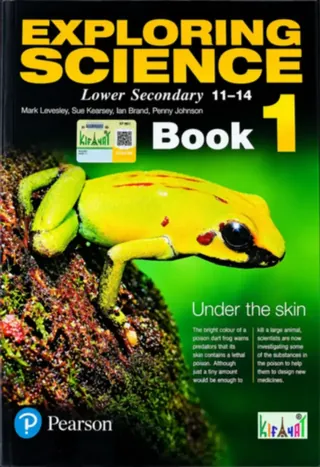
Exploring Science Book 2, Lower Secondary 11–14, by Mark Levesley, Sue Kearsey, Iain Brand and Penny Johnson (Pearson, with the Kifayat sticker) for Class 7 in session 2027-28: 12 chapters and 108 lessons in biology, chemistry and physics, with 12 STEM lessons, 12 working-scientifically lessons, a glossary and a periodic table.
Key details
- Class 7 · Science student book
- Pearson · Lower Secondary 11–14
- 12 chapters · 108 lessons
- Session 2027-28
ISBN: 9789696771616
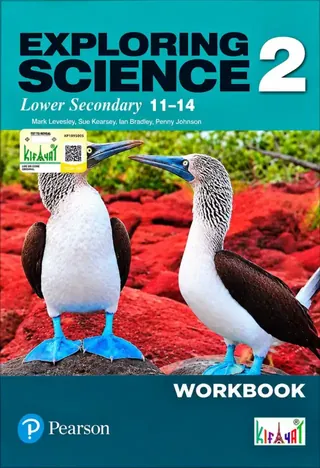
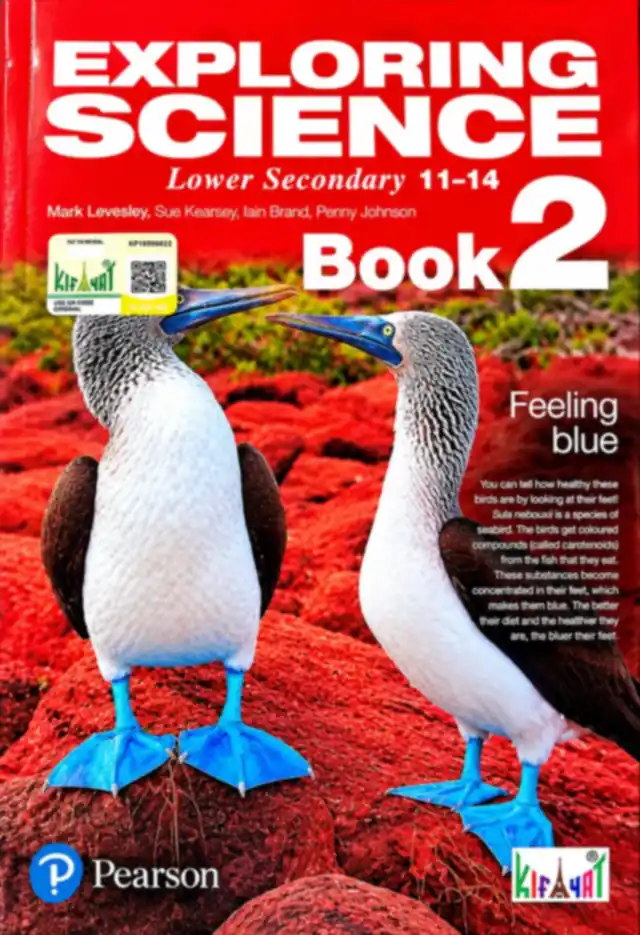
Exploring Science – Book 2 (Lower Secondary 11–14), by Mark Levesley, Sue Kearsey, Iain Brand and Penny Johnson, is published by Pearson and carries the Kifayat sticker on the cover. It is the Class 7 science student book in this series. Its contents list twelve chapters and 108 lessons: four chapters each in biology, chemistry and physics, with a glossary, a periodic table and an index. This page is for the 2027-28 session. Exam Book House, Shop Number 4, Al Fazal Market, Urdu Bazar, Lahore, supplies it with cash on delivery across Pakistan and delivery to the Gulf countries.
Quick facts
- Title on the cover: Exploring Science, Lower Secondary 11–14, Book 2
- Authors on the cover: Mark Levesley, Sue Kearsey, Iain Brand, Penny Johnson
- Publisher: Pearson; the cover has the Kifayat sticker and logo
- Structure: 12 chapters, 9 lessons in each, 108 lessons in all
- Special lessons: 12 "STEM" lessons and 12 "WS" (working scientifically) lessons
- Back matter: Glossary (page 197), Periodic table (page 206), Index (page 207)
- Cover picture: two blue-footed boobies on red rock, with a "Feeling blue" caption explaining why the feet are blue
- Shown on: School Books → Class 7
- Session: 2027-28
How the book is built
The contents show a very regular design. Every chapter has nine lessons, most lessons are two pages long (1.1b starts on page 6, 1.2a on page 8, 1.3a on page 10), and every chapter takes 16 pages. Lessons are labelled with a number and a letter: 1.1a and 1.1b are the two lessons of topic 1.1, and so on. Two kinds of lesson are marked in brackets:
- (WS) – Working Scientifically. These lessons teach skills such as measuring, plotting and judging results. There is one in every chapter, for example Surface area (WS) (1.5a), Pie charts (WS) (4.3b), Fair testing (WS) (5.3b) and Accuracy and precision (WS) (11.3b).
- (STEM). These lessons link science to technology, engineering and mathematics, with one in every chapter, such as Making new foods (STEM) (1.3b), Epidemiology (STEM) (3.3b) and Operating aeroplanes (STEM) (9.5b).
Several chapters open with a lesson whose title points to a real event or situation: Water sports and breathing, The Black Death, Engines, Fireworks, Disaster!, Exploring extremes, Living in extremes and Changing ideas. That can help a student to see a reason to study the chapter before the details begin.
The twelve chapters
| Subject | Chapter | Starts on page | Lessons |
|---|---|---|---|
| Biology | 1. Food and nutrition | 5 | 9 |
| Biology | 2. Plants and their reproduction | 21 | 9 |
| Biology | 3. Breathing and respiration | 37 | 9 |
| Biology | 4. Unicellular organisms | 53 | 9 |
| Chemistry | 5. Combustion | 69 | 9 |
| Chemistry | 6. The periodic table | 85 | 9 |
| Chemistry | 7. Metals and their uses | 101 | 9 |
| Chemistry | 8. Rocks | 117 | 9 |
| Physics | 9. Fluids | 133 | 9 |
| Physics | 10. Light | 149 | 9 |
| Physics | 11. Energy transfers | 165 | 9 |
| Physics | 12. Earth and space | 181 | 9 |
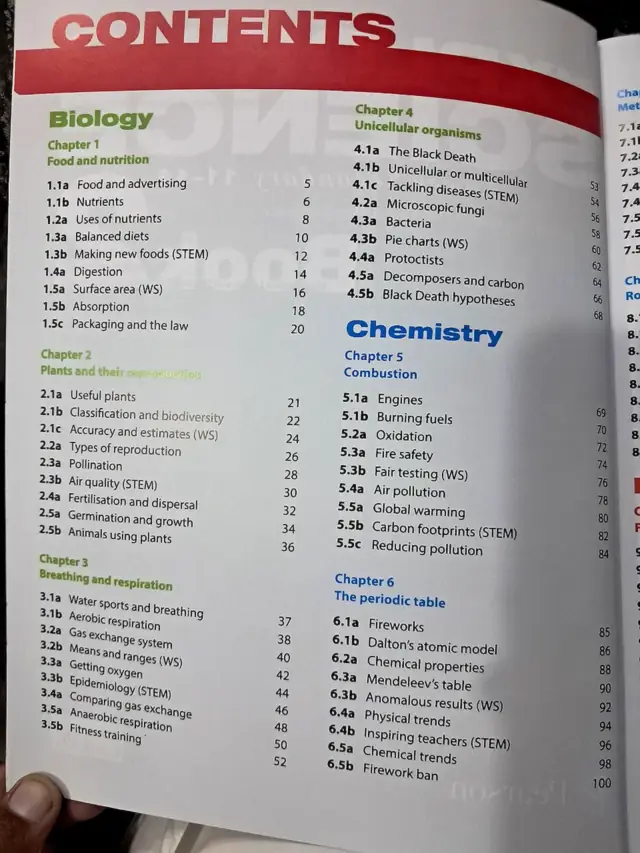
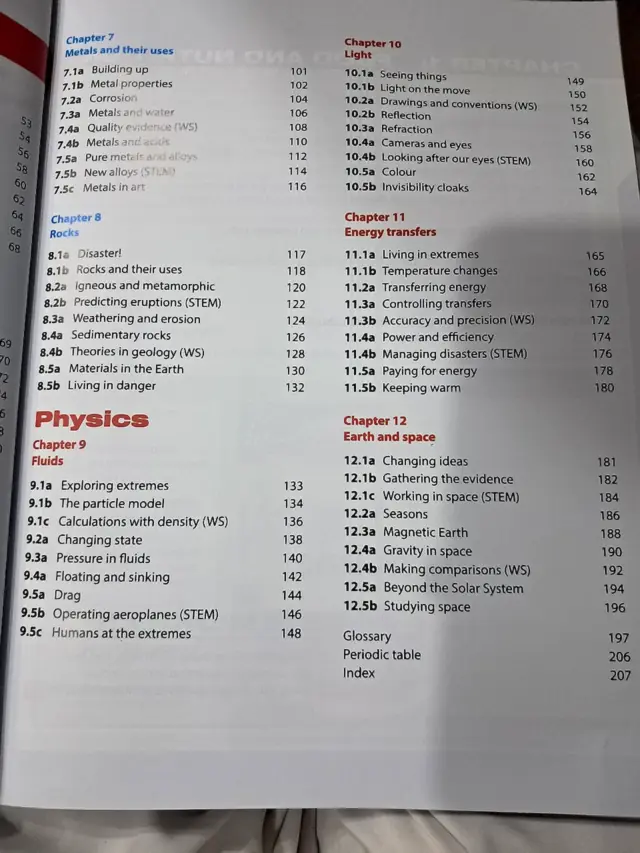
Complete table of contents (as printed)
| Lesson | Title | Page |
|---|---|---|
| Biology | ||
| Chapter 1 | Food and nutrition | |
| 1.1a | Food and advertising | 5 |
| 1.1b | Nutrients | 6 |
| 1.2a | Uses of nutrients | 8 |
| 1.3a | Balanced diets | 10 |
| 1.3b | Making new foods (STEM) | 12 |
| 1.4a | Digestion | 14 |
| 1.5a | Surface area (WS) | 16 |
| 1.5b | Absorption | 18 |
| 1.5c | Packaging and the law | 20 |
| Chapter 2 | Plants and their reproduction | |
| 2.1a | Useful plants | 21 |
| 2.1b | Classification and biodiversity | 22 |
| 2.1c | Accuracy and estimates (WS) | 24 |
| 2.2a | Types of reproduction | 26 |
| 2.3a | Pollination | 28 |
| 2.3b | Air quality (STEM) | 30 |
| 2.4a | Fertilisation and dispersal | 32 |
| 2.5a | Germination and growth | 34 |
| 2.5b | Animals using plants | 36 |
| Chapter 3 | Breathing and respiration | |
| 3.1a | Water sports and breathing | 37 |
| 3.1b | Aerobic respiration | 38 |
| 3.2a | Gas exchange system | 40 |
| 3.2b | Means and ranges (WS) | 42 |
| 3.3a | Getting oxygen | 44 |
| 3.3b | Epidemiology (STEM) | 46 |
| 3.4a | Comparing gas exchange | 48 |
| 3.5a | Anaerobic respiration | 50 |
| 3.5b | Fitness training | 52 |
| Chapter 4 | Unicellular organisms | |
| 4.1a | The Black Death | 53 |
| 4.1b | Unicellular or multicellular | 54 |
| 4.1c | Tackling diseases (STEM) | 56 |
| 4.2a | Microscopic fungi | 58 |
| 4.3a | Bacteria | 60 |
| 4.3b | Pie charts (WS) | 62 |
| 4.4a | Protoctists | 64 |
| 4.5a | Decomposers and carbon | 66 |
| 4.5b | Black Death hypotheses | 68 |
| Chemistry | ||
| Chapter 5 | Combustion | |
| 5.1a | Engines | 69 |
| 5.1b | Burning fuels | 70 |
| 5.2a | Oxidation | 72 |
| 5.3a | Fire safety | 74 |
| 5.3b | Fair testing (WS) | 76 |
| 5.4a | Air pollution | 78 |
| 5.5a | Global warming | 80 |
| 5.5b | Carbon footprints (STEM) | 82 |
| 5.5c | Reducing pollution | 84 |
| Chapter 6 | The periodic table | |
| 6.1a | Fireworks | 85 |
| 6.1b | Dalton's atomic model | 86 |
| 6.2a | Chemical properties | 88 |
| 6.3a | Mendeleev's table | 90 |
| 6.3b | Anomalous results (WS) | 92 |
| 6.4a | Physical trends | 94 |
| 6.4b | Inspiring teachers (STEM) | 96 |
| 6.5a | Chemical trends | 98 |
| 6.5b | Firework ban | 100 |
| Chapter 7 | Metals and their uses | |
| 7.1a | Building up | 101 |
| 7.1b | Metal properties | 102 |
| 7.2a | Corrosion | 104 |
| 7.3a | Metals and water | 106 |
| 7.4a | Quality evidence (WS) | 108 |
| 7.4b | Metals and acids | 110 |
| 7.5a | Pure metals and alloys | 112 |
| 7.5b | New alloys (STEM) | 114 |
| 7.5c | Metals in art | 116 |
| Chapter 8 | Rocks | |
| 8.1a | Disaster! | 117 |
| 8.1b | Rocks and their uses | 118 |
| 8.2a | Igneous and metamorphic | 120 |
| 8.2b | Predicting eruptions (STEM) | 122 |
| 8.3a | Weathering and erosion | 124 |
| 8.4a | Sedimentary rocks | 126 |
| 8.4b | Theories in geology (WS) | 128 |
| 8.5a | Materials in the Earth | 130 |
| 8.5b | Living in danger | 132 |
| Physics | ||
| Chapter 9 | Fluids | |
| 9.1a | Exploring extremes | 133 |
| 9.1b | The particle model | 134 |
| 9.1c | Calculations with density (WS) | 136 |
| 9.2a | Changing state | 138 |
| 9.3a | Pressure in fluids | 140 |
| 9.4a | Floating and sinking | 142 |
| 9.5a | Drag | 144 |
| 9.5b | Operating aeroplanes (STEM) | 146 |
| 9.5c | Humans at the extremes | 148 |
| Chapter 10 | Light | |
| 10.1a | Seeing things | 149 |
| 10.1b | Light on the move | 150 |
| 10.2a | Drawings and conventions (WS) | 152 |
| 10.2b | Reflection | 154 |
| 10.3a | Refraction | 156 |
| 10.4a | Cameras and eyes | 158 |
| 10.4b | Looking after our eyes (STEM) | 160 |
| 10.5a | Colour | 162 |
| 10.5b | Invisibility cloaks | 164 |
| Chapter 11 | Energy transfers | |
| 11.1a | Living in extremes | 165 |
| 11.1b | Temperature changes | 166 |
| 11.2a | Transferring energy | 168 |
| 11.3a | Controlling transfers | 170 |
| 11.3b | Accuracy and precision (WS) | 172 |
| 11.4a | Power and efficiency | 174 |
| 11.4b | Managing disasters (STEM) | 176 |
| 11.5a | Paying for energy | 178 |
| 11.5b | Keeping warm | 180 |
| Chapter 12 | Earth and space | |
| 12.1a | Changing ideas | 181 |
| 12.1b | Gathering the evidence | 182 |
| 12.1c | Working in space (STEM) | 184 |
| 12.2a | Seasons | 186 |
| 12.3a | Magnetic Earth | 188 |
| 12.4a | Gravity in space | 190 |
| 12.4b | Making comparisons (WS) | 192 |
| 12.5a | Beyond the Solar System | 194 |
| 12.5b | Studying space | 196 |
| Glossary | 197 | |
| Periodic table | 206 | |
| Index | 207 |
Pairing with the workbook
The Exploring Science 2 Workbook has the same twelve chapter titles, from Food and nutrition to Earth and space. The student book carries the lessons, and the workbook carries the practice pages, so a school may use them together. If your school's list names only one of them, buy only that one.
How to use the student book
- Read the opening lesson of each chapter first. Many of them point to a real event (the Black Death, fireworks, a disaster). Ask "what do I already know about this?" before you go on.
- Do the WS lessons with a pencil and ruler. They teach the skills that the practical work and exam questions need.
- Use the STEM lessons as extension. They are a way to see how scientists and engineers use what is in the chapter.
- Keep the glossary (page 197) open as you read, and add each new term to your own list.
- Use the periodic table (page 206) in the chemistry chapters, especially chapter 6.
A plan for the 2027-28 session
| Term | Chapters | Pages |
|---|---|---|
| First | Biology: chapters 1 to 4 | 5–68 |
| Second | Chemistry: chapters 5 to 8 | 69–132 |
| Third | Physics: chapters 9 to 12 | 133–196 |
Each chapter is 16 pages, so a chapter every two weeks finishes the book in about 24 weeks and leaves time for revision and tests. Your teacher will decide the exact order.
For session 2027-28
Lists can change from year to year, so check your school's 2027-28 Class 7 list, and send it on WhatsApp if you want us to match it. We supply the newest edition we can get.
Matching and similar books
- Class 7 Pearson Exploring Science 2 Workbook is the workbook that goes with this student book.
- Class 7 Cambridge Lower Secondary Science 7, Hodder 3rd Ed. and Army Public School Class 7 – Oxford Secondary Science 7 are other Class 7 science books. They are different books; use the one on your school's list.
Buy it in Urdu Bazar, Lahore
- Shop: Exam Book House, Shop Number 4, Al Fazal Market, Urdu Bazar, Lahore 54000
- Urdu Bazar Lahore book shop number: 0317 4846676 (call or WhatsApp)
- Open: Monday to Saturday, 9 AM – 9 PM; closed on Sunday
- Delivery: all over Pakistan with cash on delivery, and to the Gulf countries
People also search for this book as
exploring science book 2 · pearson exploring science lower secondary 11-14 student book · levesley kearsey brand johnson science · class 7 science book lahore · kifayat exploring science 2 · biology chemistry physics class 7 · urdu bazar lahore school books · session 2027-28
Frequently asked questions
Is this the Class 7 science book for session 2027-28?
It is Exploring Science Book 2 (Lower Secondary 11–14) from Pearson. If your school's 2027-28 Class 7 list names it, this is the right book. Send the list on WhatsApp and we will check it.
How many chapters and lessons does it have?
Twelve chapters and 108 lessons: four chapters each in biology, chemistry and physics.
What are the STEM and WS lessons?
STEM lessons link science to technology, engineering and mathematics. WS lessons teach working scientifically skills such as measuring and handling results. There are 12 of each.
Is it the same as the workbook?
No. This is the student book. The workbook is a separate title with practice pages.
Do you deliver outside Lahore?
Yes. We deliver all over Pakistan with cash on delivery, and to the Gulf countries. Send your name, address and the book name on WhatsApp at 0317 4846676, or call the shop in Urdu Bazar, Lahore (Monday to Saturday, 9 AM – 9 PM).
Inside the book — contents and sample pages