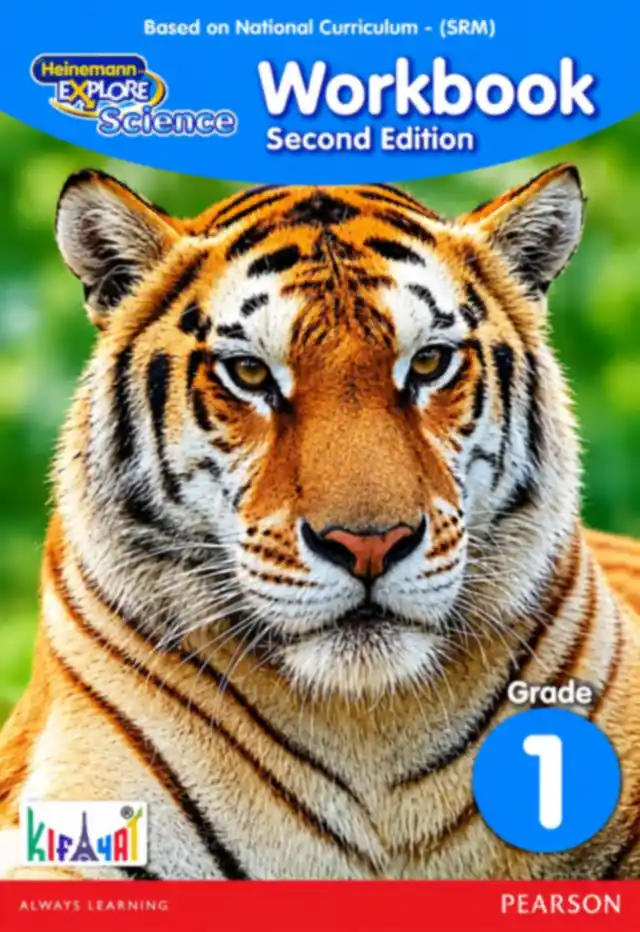
Class 1 Heinemann Explore Science Workbook 1, 2nd Ed. (2027-28)
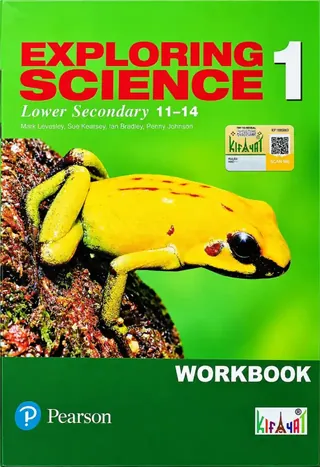
Heinemann Explore Science Workbook, Grade 1, Second Edition (Pearson, with the Kifayat logo, "Based on National Curriculum – SRM") for Class 1 in session 2027-28: 27 worksheets in five units, from living things and plants to materials, forces and sound, plus six revision worksheets.
Key details
- Class 1 · Science workbook
- Pearson · Second Edition
- 27 worksheets · 5 units
- Session 2027-28
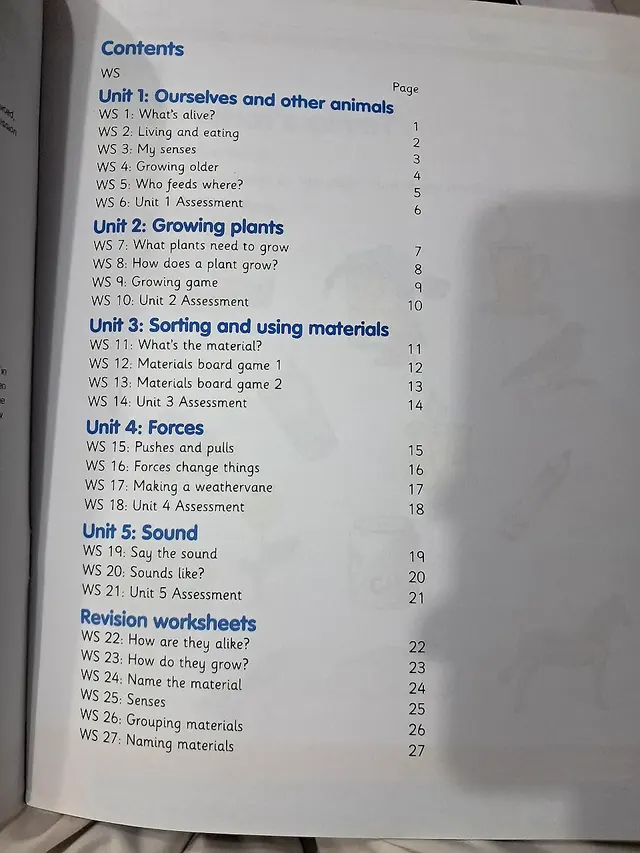
Heinemann Explore Science Workbook 1 (Second Edition) is the Grade 1 science workbook from Pearson, printed with the line "Based on National Curriculum – (SRM)" and the Kifayat logo. Its contents list 27 worksheets, one on each page: five units (Ourselves and other animals, Growing plants, Sorting and using materials, Forces and Sound) and six revision worksheets. This page is for the 2027-28 session and for Class 1. Exam Book House, Shop Number 4, Al Fazal Market, Urdu Bazar, Lahore, supplies it with cash on delivery across Pakistan and delivery to the Gulf countries.
Quick facts
- Title on the cover: Heinemann Explore Science, Workbook, Second Edition, Grade 1
- Publisher: Pearson ("Always learning" on the cover); the Kifayat logo is at the bottom left
- Curriculum line on the cover: Based on National Curriculum – (SRM)
- Worksheets: 27, numbered WS 1 to WS 27, one per page
- Units: 5, plus a block of 6 revision worksheets
- Assessment: an "assessment" worksheet at the end of each of the five units (WS 6, 10, 14, 18 and 21)
- Cover picture: a close-up of a tiger's face
- Shown on: School Books → Class 1
- Session: 2027-28
What a "workbook" is, and what this one asks a child to do
A student book carries the lessons. A workbook carries the pages the child writes on, colours or cuts. This one is built from single-page worksheets, so every page has its own activity and a child can finish one page in one short sitting. For a Class 1 child that matters: the sheet is short, it has a clear start and finish, and a teacher or parent can check it quickly.
Its titles show the kind of work: questions such as What's alive? and How does a plant grow?, games (Growing game, Materials board game 1 and 2), a making activity (Making a weathervane), and an assessment at the end of each unit.
All 27 worksheets, with their pages
| Unit | Worksheet | Page |
|---|---|---|
| Unit 1: Ourselves and other animals | WS 1: What's alive? | 1 |
| WS 2: Living and eating | 2 | |
| WS 3: My senses | 3 | |
| WS 4: Growing older | 4 | |
| WS 5: Who feeds where? | 5 | |
| WS 6: Unit 1 Assessment | 6 | |
| Unit 2: Growing plants | WS 7: What plants need to grow | 7 |
| WS 8: How does a plant grow? | 8 | |
| WS 9: Growing game | 9 | |
| WS 10: Unit 2 Assessment | 10 | |
| Unit 3: Sorting and using materials | WS 11: What's the material? | 11 |
| WS 12: Materials board game 1 | 12 | |
| WS 13: Materials board game 2 | 13 | |
| WS 14: Unit 3 Assessment | 14 | |
| Unit 4: Forces | WS 15: Pushes and pulls | 15 |
| WS 16: Forces change things | 16 | |
| WS 17: Making a weathervane | 17 | |
| WS 18: Unit 4 Assessment | 18 | |
| Unit 5: Sound | WS 19: Say the sound | 19 |
| WS 20: Sounds like? | 20 | |
| WS 21: Unit 5 Assessment | 21 | |
| Revision worksheets | WS 22: How are they alike? | 22 |
| WS 23: How do they grow? | 23 | |
| WS 24: Name the material | 24 | |
| WS 25: Senses | 25 | |
| WS 26: Grouping materials | 26 | |
| WS 27: Naming materials | 27 |
The five units at a glance
| Unit | Worksheets | Pages | Theme |
|---|---|---|---|
| 1 | WS 1 to 6 | 1–6 | Living things, senses, growing and feeding |
| 2 | WS 7 to 10 | 7–10 | What plants need and how they grow |
| 3 | WS 11 to 14 | 11–14 | Materials and what things are made of |
| 4 | WS 15 to 18 | 15–18 | Pushes, pulls and what forces do |
| 5 | WS 19 to 21 | 19–21 | Sounds and how we describe them |
| Revision | WS 22 to 27 | 22–27 | Looking back at living things, plants, materials and senses |
Unit 1 is the biggest unit with six worksheets, and unit 5 is the smallest with three. The revision block comes last and uses ideas from units 1 to 3 (alike, grow, name the material, senses, grouping materials and naming materials).
Ideas for parents, to do alongside the worksheets
These are suggestions, not part of the book. They give a child something real to look at while the worksheet gives the written task.
- Unit 1: take a walk around the home and ask "is it alive?" for ten things (a plant, a stone, a cat, a toy). Talk about which of our five senses we use for each.
- Unit 2: put a bean seed on damp cotton in a glass and draw it every two days. Ask "what does it need?" (water, light, warmth).
- Unit 3: sort the kitchen items into piles of wood, plastic, metal and glass. Ask which one floats and which one sinks.
- Unit 4: play with a door and a toy car: pushing and pulling. Then talk about what changes: faster, slower, a new direction.
- Unit 5: fill glasses with different amounts of water and tap them. Listen for high and low sounds. Ask the child to say them aloud: loud, soft, high, low.
How to use the workbook
- One worksheet, one sitting. Each is a single page, so keep it to ten or fifteen minutes.
- Read the question aloud if the child is a beginning reader. Let the child answer in a picture or a word.
- Use the assessment worksheets (WS 6, 10, 14, 18 and 21) as quick checks, and the six revision worksheets (WS 22–27) before the term test.
- Praise the process. Ask "how did you work that out?" even when the answer is right.
For session 2027-28
A school year with five units can be planned as one unit every five to six weeks, with the revision worksheets in the last two weeks. Your teacher will decide the exact timetable, and your school's 2027-28 list tells you whether this workbook is used with a student book. Lists can change from year to year, and we supply the newest edition we can get.
Matching and similar books
- Class 1 Heinemann Explore Science Student Book 1 has the same five units and carries the lessons that this workbook practises.
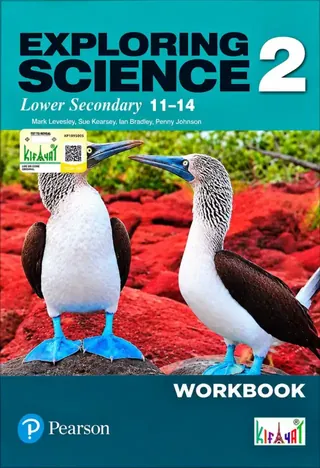
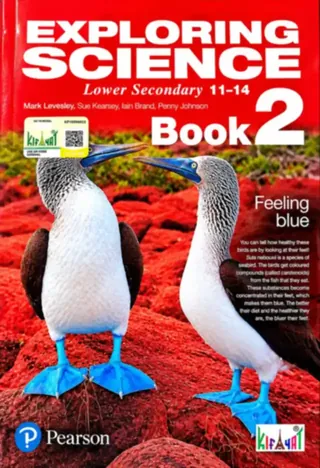
- Class 2 Heinemann Explore Science Workbook 2 and Class 2 Heinemann Explore Science Student Book 2 are the Grade 2 books of the same series.
- Class 1 Cambridge Primary Science Workbook 1 and Class 1 New Oxford Primary Science Grade 1 are other Class 1 science books from different publishers. Use the one your school's list names.
Buy it in Urdu Bazar, Lahore
- Shop: Exam Book House, Shop Number 4, Al Fazal Market, Urdu Bazar, Lahore 54000
- Urdu Bazar Lahore book shop number: 0317 4846676 (call or WhatsApp)
- Open: Monday to Saturday, 9 AM – 9 PM; closed on Sunday
- Delivery: all over Pakistan with cash on delivery, and to the Gulf countries
People also search for this book as
heinemann explore science workbook 1 · explore science grade 1 workbook second edition · pearson science workbook class 1 · kifayat explore science grade 1 · class 1 science workbook lahore · heinemann science class 1 · urdu bazar lahore school books · session 2027-28
Frequently asked questions
Is this the Class 1 science workbook for session 2027-28?
It is the Heinemann Explore Science Workbook for Grade 1, Second Edition from Pearson. If your school's 2027-28 Class 1 list names it, this is the right book. Send the list on WhatsApp and we will check it.
How many worksheets does it have?
Twenty-seven worksheets, one per page, in five units plus revision worksheets.
Does it have a student book?
The Grade 1 student book is a separate title (listed on this site). Ask your teacher if your class uses both.
Is it the same as the Cambridge Primary Science workbook?
No. They are different books from different publishers. Use the one named on your child's list.
Do you deliver outside Lahore?
Yes. We deliver all over Pakistan with cash on delivery, and to the Gulf countries. Send your name, address and the book name on WhatsApp at 0317 4846676, or call the shop in Urdu Bazar, Lahore (Monday to Saturday, 9 AM – 9 PM).
Inside the book — contents and sample pages