Class 4 Heinemann Explore Science Workbook 4, 2nd Ed. (2027-28)
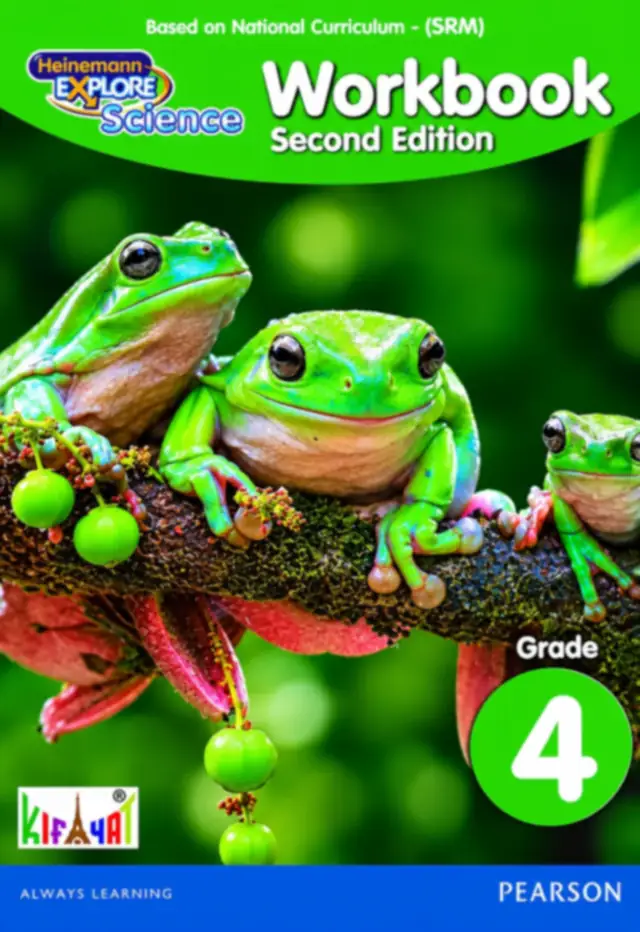
Heinemann Explore Science Workbook, Grade 4, Second Edition (Pearson, with the Kifayat logo) for Class 4 in session 2027-28: 64 worksheets in six units on humans and animals, living things in their environment, keeping warm, separating solids and liquids, gases and electricity.
Key details
- Class 4 · Science workbook
- Pearson · Second Edition
- 64 worksheets · 6 units
- Session 2027-28
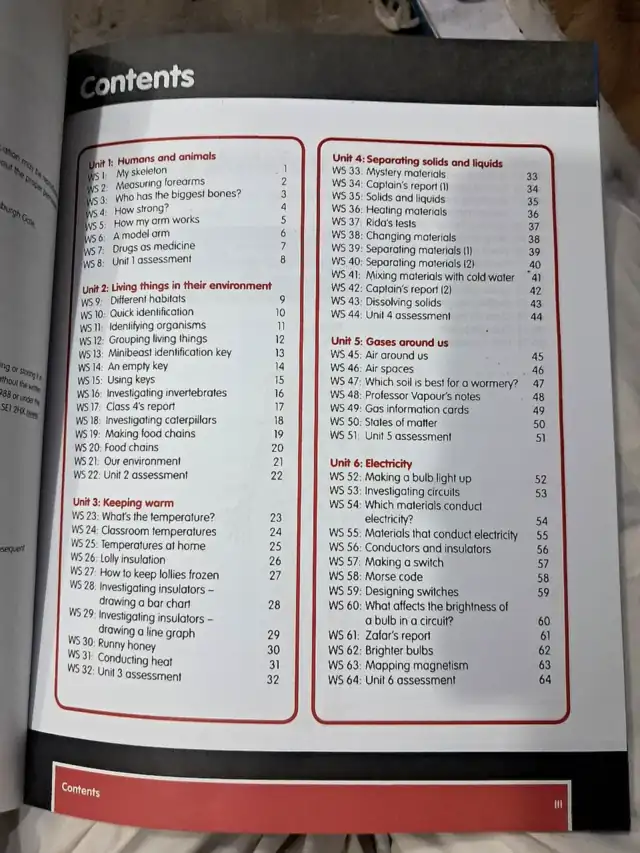
Heinemann Explore Science Workbook 4 (Second Edition) is the Grade 4 science workbook from Pearson, printed with the line "Based on National Curriculum – (SRM)" and the Kifayat logo. Its contents list 64 worksheets, one on each page, in six units: Humans and animals, Living things in their environment, Keeping warm, Separating solids and liquids, Gases around us and Electricity. This page is for the 2027-28 session and for Class 4. Exam Book House, Shop Number 4, Al Fazal Market, Urdu Bazar, Lahore, supplies it with cash on delivery across Pakistan and delivery to the Gulf countries.
Quick facts
- Title on the cover: Heinemann Explore Science, Workbook, Second Edition, Grade 4
- Publisher: Pearson ("Always learning" on the cover); the Kifayat logo is at the bottom left
- Curriculum line on the cover: Based on National Curriculum – (SRM)
- Worksheets: 64, numbered WS 1 to WS 64, one per page
- Units: 6, each ending with a "Unit assessment" worksheet
- Largest unit: Unit 2, Living things in their environment, 14 worksheets (pages 9 to 22)
- Cover picture: three green tree frogs on a branch
- Shown on: School Books → Class 4
- Session: 2027-28
What changes between Grade 3 and Grade 4
Class 3 science in this series is full of materials, rocks and forces. In Class 4 the topics move toward the body, classification, heat, matter and electricity. The worksheets also start to ask for more data work: Investigating insulators – drawing a bar chart (WS 28) and Investigating insulators – drawing a line graph (WS 29) ask the child to turn measurements into a chart. Students who are comfortable with a table, a bar chart and a line graph by the end of the year are well prepared for the upper primary years.
Several worksheets are written as the account of a person or a team: Class 4's report (WS 17), Captain's report (1) and (2) (WS 34 and WS 42), Rida's tests (WS 37), Professor Vapour's notes (WS 48) and Zafar's report (WS 61). They show a child how a finished report looks.
All 64 worksheets, with their pages
| Unit | Worksheet | Page |
|---|---|---|
| Unit 1: Humans and animals | ||
| WS 1: My skeleton | 1 | |
| WS 2: Measuring forearms | 2 | |
| WS 3: Who has the biggest bones? | 3 | |
| WS 4: How strong? | 4 | |
| WS 5: How my arm works | 5 | |
| WS 6: A model arm | 6 | |
| WS 7: Drugs as medicine | 7 | |
| WS 8: Unit 1 assessment | 8 | |
| Unit 2: Living things in their environment | ||
| WS 9: Different habitats | 9 | |
| WS 10: Quick identification | 10 | |
| WS 11: Identifying organisms | 11 | |
| WS 12: Grouping living things | 12 | |
| WS 13: Minibeast identification key | 13 | |
| WS 14: An empty key | 14 | |
| WS 15: Using keys | 15 | |
| WS 16: Investigating invertebrates | 16 | |
| WS 17: Class 4's report | 17 | |
| WS 18: Investigating caterpillars | 18 | |
| WS 19: Making food chains | 19 | |
| WS 20: Food chains | 20 | |
| WS 21: Our environment | 21 | |
| WS 22: Unit 2 assessment | 22 | |
| Unit 3: Keeping warm | ||
| WS 23: What's the temperature? | 23 | |
| WS 24: Classroom temperatures | 24 | |
| WS 25: Temperatures at home | 25 | |
| WS 26: Lolly insulation | 26 | |
| WS 27: How to keep lollies frozen | 27 | |
| WS 28: Investigating insulators – drawing a bar chart | 28 | |
| WS 29: Investigating insulators – drawing a line graph | 29 | |
| WS 30: Runny honey | 30 | |
| WS 31: Conducting heat | 31 | |
| WS 32: Unit 3 assessment | 32 | |
| Unit 4: Separating solids and liquids | ||
| WS 33: Mystery materials | 33 | |
| WS 34: Captain's report (1) | 34 | |
| WS 35: Solids and liquids | 35 | |
| WS 36: Heating materials | 36 | |
| WS 37: Rida's tests | 37 | |
| WS 38: Changing materials | 38 | |
| WS 39: Separating materials (1) | 39 | |
| WS 40: Separating materials (2) | 40 | |
| WS 41: Mixing materials with cold water | 41 | |
| WS 42: Captain's report (2) | 42 | |
| WS 43: Dissolving solids | 43 | |
| WS 44: Unit 4 assessment | 44 | |
| Unit 5: Gases around us | ||
| WS 45: Air around us | 45 | |
| WS 46: Air spaces | 46 | |
| WS 47: Which soil is best for a wormery? | 47 | |
| WS 48: Professor Vapour's notes | 48 | |
| WS 49: Gas information cards | 49 | |
| WS 50: States of matter | 50 | |
| WS 51: Unit 5 assessment | 51 | |
| Unit 6: Electricity | ||
| WS 52: Making a bulb light up | 52 | |
| WS 53: Investigating circuits | 53 | |
| WS 54: Which materials conduct electricity? | 54 | |
| WS 55: Materials that conduct electricity | 55 | |
| WS 56: Conductors and insulators | 56 | |
| WS 57: Making a switch | 57 | |
| WS 58: Morse code | 58 | |
| WS 59: Designing switches | 59 | |
| WS 60: What affects the brightness of a bulb in a circuit? | 60 | |
| WS 61: Zafar's report | 61 | |
| WS 62: Brighter bulbs | 62 | |
| WS 63: Mapping magnetism | 63 | |
| WS 64: Unit 6 assessment | 64 |
The six units at a glance
| Unit | Worksheets | Pages | Number of worksheets |
|---|---|---|---|
| Unit 1: Humans and animals | WS 1 to 8 | 1–8 | 8 |
| Unit 2: Living things in their environment | WS 9 to 22 | 9–22 | 14 |
| Unit 3: Keeping warm | WS 23 to 32 | 23–32 | 10 |
| Unit 4: Separating solids and liquids | WS 33 to 44 | 33–44 | 12 |
| Unit 5: Gases around us | WS 45 to 51 | 45–51 | 7 |
| Unit 6: Electricity | WS 52 to 64 | 52–64 | 13 |
What children practise, unit by unit
- Unit 1 – Humans and animals (8 worksheets). A tour of the skeleton and how an arm works: measuring forearms (WS 2), comparing bone sizes (WS 3), testing strength (WS 4), a working model arm (WS 6) and medicines (WS 7).
- Unit 2 – Living things in their environment (14 worksheets). Habitats, then identification keys (WS 10 to 15, including an empty key to complete), a study of invertebrates and caterpillars, and food chains (WS 19 and 20). It is the longest unit.
- Unit 3 – Keeping warm (10 worksheets). Temperature at school and at home, lolly insulation experiments, insulators drawn as a bar chart and a line graph, and heat conduction (WS 31).
- Unit 4 – Separating solids and liquids (12 worksheets). Mystery materials, heating and changing materials, separating mixtures twice (WS 39 and 40), mixing with cold water and dissolving solids.
- Unit 5 – Gases around us (7 worksheets). Air around us (WS 45), air spaces (WS 46), which soil is best for a wormery (WS 47), gas information cards and states of matter (WS 50). It is the shortest unit.
- Unit 6 – Electricity (13 worksheets). Lighting a bulb, circuits, which materials conduct, switches (WS 57 and 59), Morse code (WS 58), brightness of bulbs and magnetism (WS 63).
How to use the workbook
- One worksheet at a time. Each one is a single page, so 15 to 20 minutes is enough.
- Do the "key" worksheets slowly. Identification keys (WS 13 to 15) teach a way of sorting that is useful in every science subject.
- Draw the charts by hand, with a ruler, and label the axes. Do not skip the labels.
- Use the unit assessments (WS 8, 22, 32, 44, 51 and 64) as a check before the school test.
- Practise safely. The electricity worksheets use small batteries, bulbs and wires, which should be done with an adult. Never experiment with mains electricity.
Home ideas (not part of the book)
- Compare how quickly ice melts in a cup wrapped in cloth, foil and paper.
- Draw a food chain from a garden or a park visit.
- Stir sugar, salt and sand in water and see which dissolve.
- With an adult, build a torch circuit from a small battery, a bulb and two wires.
For session 2027-28
The 64 worksheets can be spread over the school year with about two a week. Your teacher will choose which to do in class. Lists can change from year to year, so check your school's 2027-28 Class 4 list, and send it on WhatsApp if you want us to match it. We supply the newest edition we can get.
Matching and similar books
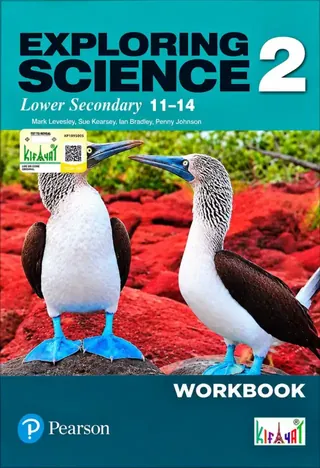
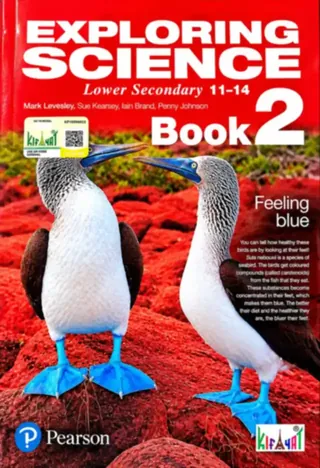
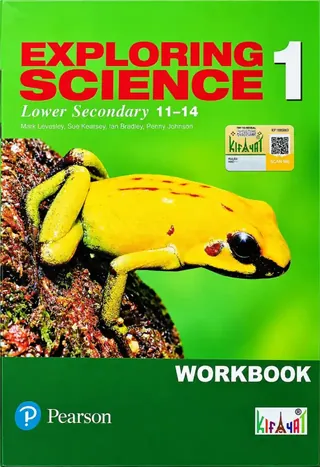
- Class 3 Heinemann Explore Science Workbook 3 is the previous year of the same series, and Class 2 Heinemann Explore Science Workbook 2 the year before that.
- Class 4 Cambridge Primary Science Learner's Book 4 and Class 4 New Oxford Primary Science Level 4 are Class 4 science books from other publishers; use the one on your child's list.
Buy it in Urdu Bazar, Lahore
- Shop: Exam Book House, Shop Number 4, Al Fazal Market, Urdu Bazar, Lahore 54000
- Urdu Bazar Lahore book shop number: 0317 4846676 (call or WhatsApp)
- Open: Monday to Saturday, 9 AM – 9 PM; closed on Sunday
- Delivery: all over Pakistan with cash on delivery, and to the Gulf countries
People also search for this book as
heinemann explore science workbook 4 · explore science grade 4 workbook second edition · pearson science workbook class 4 · kifayat explore science grade 4 · class 4 science workbook lahore · heinemann science class 4 · urdu bazar lahore school books · session 2027-28
Frequently asked questions
Is this the Class 4 science workbook for session 2027-28?
It is the Heinemann Explore Science Workbook for Grade 4, Second Edition from Pearson. If your school's 2027-28 Class 4 list names it, this is the right book. Send the list on WhatsApp and we will check it.
How many worksheets and units does it have?
Sixty-four worksheets in six units, one per page.
Which unit is the longest?
Unit 2, Living things in their environment, with 14 worksheets (pages 9 to 22).
Does it include electricity?
Yes, Unit 6 has 13 worksheets from making a bulb light up (WS 52) to Unit 6 assessment (WS 64).
Do you deliver outside Lahore?
Yes. We deliver all over Pakistan with cash on delivery, and to the Gulf countries. Send your name, address and the book name on WhatsApp at 0317 4846676, or call the shop in Urdu Bazar, Lahore (Monday to Saturday, 9 AM – 9 PM).
Inside the book — contents and sample pages