The Smart School Prep – World Around Us, Beginners (Session 2027-28)
The Smart School (A Project of The City School)

Cambridge Primary Science Learner's Book 3, Second edition, by Jon Board and Alan Cross, with digital access, for session 2027-28: plants, mixing materials, light, staying alive, forces and magnets, and the Earth and Moon, for Class 3.
Cambridge Primary Science Learner's Book 3 (Second edition) by Jon Board and Alan Cross is the main science coursebook for Class 3, which Cambridge calls Stage 3. It has a crimson cover with a boy and two plants (one growing in a box), and six units: plants are living things, mixing materials, light and shadows, staying alive, forces and magnets, and the Earth and the Moon. This page is written for parents and teachers planning for the 2027-28 session.
Exams Book House, Shop Number 4, Al Fazal Market, Urdu Bazar, Lahore, supplies it with cash on delivery across Pakistan and delivery to the Gulf countries.
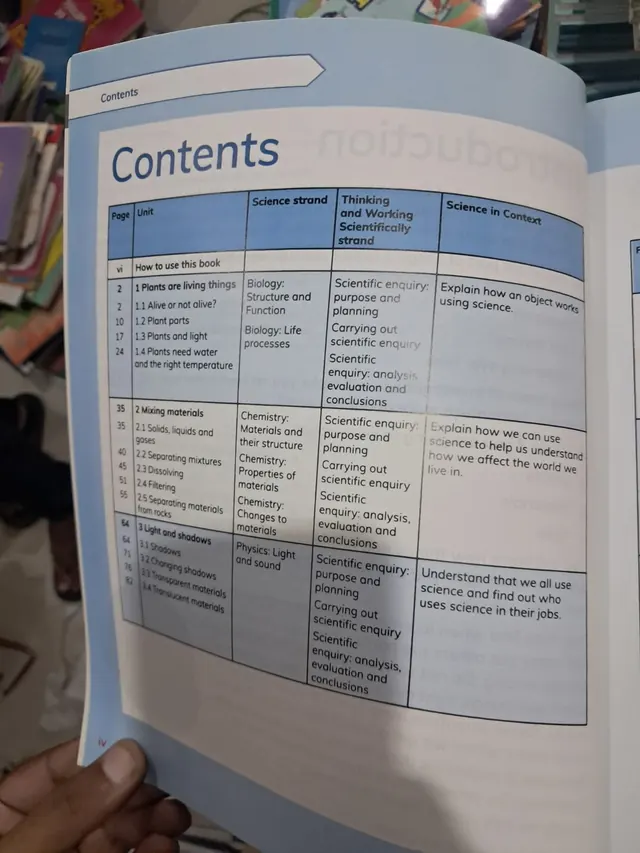
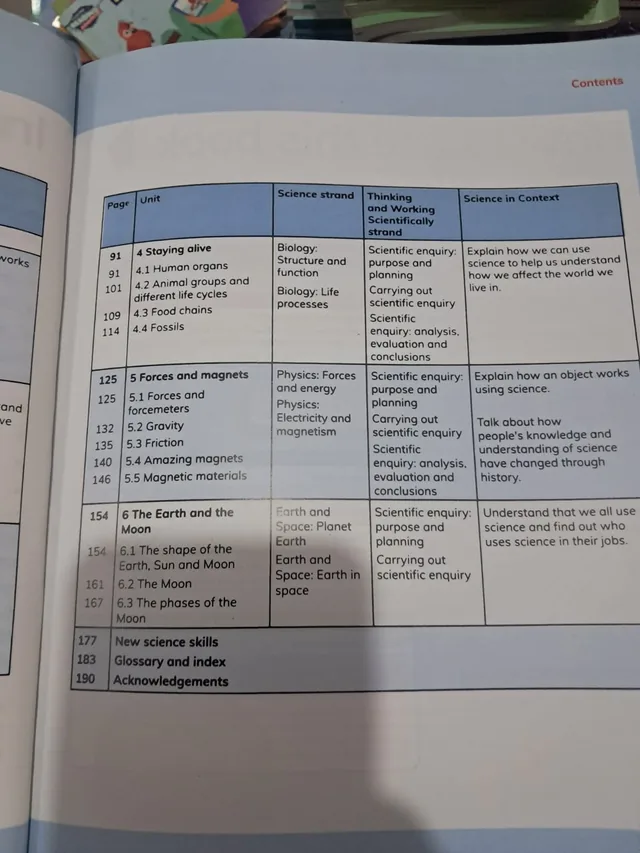
It is the student book for the third year of Cambridge Primary Science. Like the other books in the series, the contents page lists three layers beside each unit: the science strand (Biology, Chemistry, Physics, or Earth and Space), the Thinking and Working Scientifically skills, and the Science in Context idea, which links the lesson to real life. Class 3 is the year in which children begin to meet the Earth and Space strand, with a whole unit on the Earth and the Moon at the end of the book.
| Page | Unit and topics | Science strand |
|---|---|---|
| vi | How to use this book | |
| 2 | 1 Plants are living things: 1.1 Alive or not alive? (2); 1.2 Plant parts (10); 1.3 Plants and light (17); 1.4 Plants need water and the right temperature (24) | Biology: Structure and function; Life processes |
| 35 | 2 Mixing materials: 2.1 Solids, liquids and gases (35); 2.2 Separating mixtures (40); 2.3 Dissolving (45); 2.4 Filtering (51); 2.5 Separating materials from rocks (55) | Chemistry: Materials and their structure; Properties of materials; Changes to materials |
| 64 | 3 Light and shadows: 3.1 Shadows (64); 3.2 Changing shadows (71); 3.3 Transparent materials (76); 3.4 Translucent materials (82) | Physics: Light and sound |
| 91 | 4 Staying alive: 4.1 Human organs (91); 4.2 Animal groups and different life cycles (101); 4.3 Food chains (109); 4.4 Fossils (114) | Biology: Structure and function; Life processes |
| 125 | 5 Forces and magnets: 5.1 Forces and forcemeters (125); 5.2 Gravity (132); 5.3 Friction (135); 5.4 Amazing magnets (140); 5.5 Magnetic materials (146) | Physics: Forces and energy; Electricity and magnetism |
| 154 | 6 The Earth and the Moon: 6.1 The shape of the Earth, Sun and Moon (154); 6.2 The Moon (161); 6.3 The phases of the Moon (167) | Earth and Space: Planet Earth; Earth in space |
| 177 | New science skills | |
| 183 | Glossary and index | |
| 190 | Acknowledgements |
The experiments are simple and use everyday objects, so a child can repeat many of them at home. The book also makes children think like scientists, which is a major aim of the Cambridge course. The "New science skills" section on page 177 collects methods such as fair testing and recording in tables, which are useful for every subject.
Schools usually follow the units in order across the year. Unit 1 (plants) often starts the year, and unit 6 (Earth and Moon) finishes it. Check your school's plan.
If your school's 2027-28 list names Cambridge Primary Science Learner's Book 3 (Second edition), this is the book. We supply the newest printing we receive; send us your list on WhatsApp and we will tell you what we can get for you.
cambridge primary science learner's book 3 · cambridge science class 3 · stage 3 science board cross · 9781108742764 · cambridge primary science second edition class 3 2027-28 · urdu bazar lahore cambridge books · کیمبرج پرائمری سائنس 3
Yes, if your school's 2027-28 list names the Cambridge Primary Science Learner's Book 3 (Second edition).
Class 3, which Cambridge calls Stage 3.
No. A workbook is a separate book. Ask your school whether one is needed.
Six units, plus a "New science skills" section, as listed above.
Yes, all over Pakistan with cash on delivery, and to the Gulf countries. WhatsApp 0317 4846676.