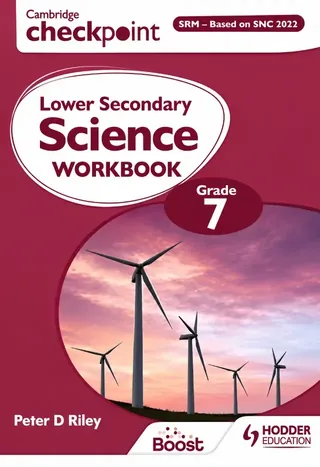
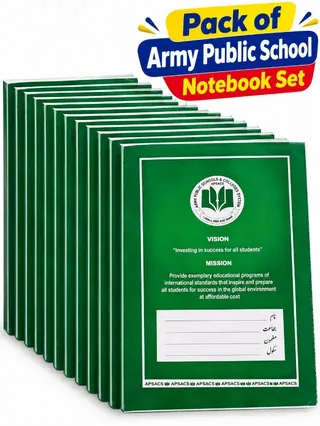
Allied School Class 4 – Science Nature Lab Book 4 (2027-28)
AEP | Arvo Education Press
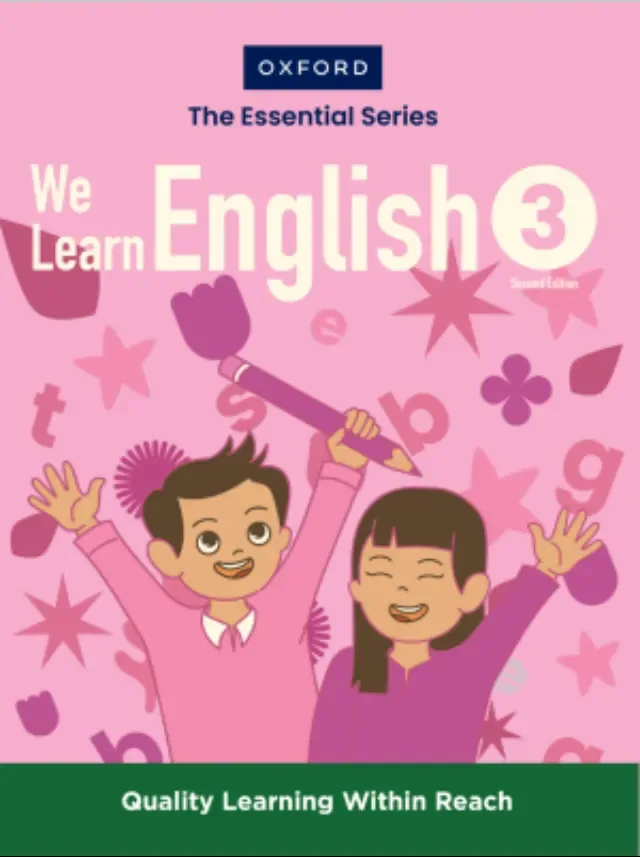
Oxford We Learn English 3 (The Essential Series, Second Edition), the Class 3 English book for session 2027-28: eleven units from Eid and school to Karachi, Kakul and honey, with three review tests and a skills table.
ISBN: 9786275222286
Oxford We Learn English 3 (The Essential Series, Second Edition) is the Class 3 English book of Oxford University Press. It has eleven units from Good deeds (page 2) to Honey (page 81), with three review tests and a glossary. The detailed contents list the stories, poems and themes, and the reading, grammar, writing and speaking skills of every unit. This page is written for the 2027-28 session. Exams Book House, Shop Number 4, Al Fazal Market, Urdu Bazar, Lahore, supplies it with cash on delivery across Pakistan and delivery to the Gulf countries.
Class 3 is the year when English becomes a reading and writing subject in its own right. We Learn English 3 gives children eleven themed units: Eid and good deeds, a first day at school, a journey to Karachi, rhymes, fables, holiday letters, winter days, stories, rules and a visit to the Pakistan Military Academy at Kakul.
The book is a skills map. For each unit the table gives themes (role models, life skills, travel and transport, technology, nature, environmental education, patriotism), sub-themes (good habits, taking care of plants, famous inventions, bravery) and text types (narrative, expository, persuasive and interpersonal). The skills columns then list reading, grammar, writing and speaking tasks.
The texts include Beenish goes to Karachi (with At the airport, Beenish meets her Grandfather and Amy Johnson, the first woman pilot), the fables The lion and the bulls and The ant and the grasshopper, the classic Jack and the beanstalk, poems such as Rain, rain go away and Wee Willie Winkie, and a modern text on the Passing out parade of Pakistan Military Academy, Kakul.
| Unit | Title | Page | Texts (as printed) |
|---|---|---|---|
| 1 | Good deeds | 2 | Eid; Unfolding the rose (poem) |
| 2 | Back to school! | 8 | Getting ready for school; First day in a new class |
| 3 | Beenish goes to Karachi | 15 | At the airport; Beenish meets her Grandfather; Amy Johnson, the first woman pilot; Grandmother tells a story |
| Review Test 1 | |||
| 4 | Fun with words! | 22 | The cat and the rat (poem); Higgledy Piggledy (poem) |
| 5 | Stories that teach a lesson | 28 | The lion and the bulls; The ant and the grasshopper |
| 6 | Enjoying the holidays | 33 | Sabiha writes a letter to Nadia; Jack and the beanstalk; Nadia's letter to Sabiha |
| 7 | Seasons | 42 | Winter days (poem) |
| Review Test 2 | |||
| 8 | Let's enter the world of stories (poem) | 49 | Some good and bad characters in stories; Riaz Ahmed; What do they do?; Bashir the fisherman; Asking questions; Wee Willie Winkie (poem) |
| 9 | All about rules | 61 | Making fruit chaat; Using the telephone |
| 10 | Passing out parade of Pakistan Military Academy, Kakul | 72 | The interview; The parade; Sports |
| 11 | Honey | 81 | Mom and dad (poem) |
| Review Test 3 and Glossary | page numbers not shown on our photograph |
| Unit | Vocabulary and grammar | Writing | Oral communication |
|---|---|---|---|
| 1 | contractions; verbs of ability can/cannot; alphabetical order; pronunciation check | sentence construction; sorting words in alphabetical order; sentence completion using contractions | poem recitation; discussion: good deeds and natural creation |
| 2 | naming (common) nouns; numbers in words; ordinal numbers; singular and plural nouns; articles a/an/the; syllabification; anagrams | naming words; writing numbers in words and ordinal numbers; completing a paragraph using articles | advertisement; discussion: school activities and belongings |
| 3 | airport jargon; story elements; verbs; silent letters | story sequencing; making sentences using verbs; true / false; can / cannot | travel experiences; transport; pronunciation check |
| 4 | adjectives; rhyming words; singular and plural nouns; countable and uncountable nouns | a simple poem; completing a story using describing words | favourite pet animals; words that rhyme |
| 5 | adjectives; nouns; story elements; alphabetical order | nouns; describing characters; sentence completion; story elements chart | discussion: moral stories; likes and dislikes about the zoo |
| 6 | informal letter; past tense; adjective order; verbs | story sequencing; missing letters in words with digraphs; numbers in words | describing a picture; "What is a letter like?" |
| 7 | present continuous tense; paragraph writing; proper nouns; prepositions | paragraph about a favourite season; a simple poem about summer | poem recitation; favourite season |
| 8 | simple present tense; pronouns; question words; word pairs; hard and soft sounds; possessive adjectives and pronouns | describing pictures using demonstratives; constructing sentences using pronouns | characters in a story |
| 9 | future tense; invitation cards; recipe; contractions; opposites; telephonic conversation; long and short vowel sounds | creating an invitation card; rules in daily life; healthy food; role-play | rules in daily life; healthy food; recipes |
| 10 | jumbled words; question marks; conjunctions; gender nouns; short answers | sentence completion using conjunctions | Pakistan Army |
| 11 | types of sentences; subject-verb-object; consonant clusters; punctuation | adding punctuation marks; true / false; short answers | origins of honey; types of bees; poem recitation |
Units 1 to 3 (pages 2–21). Good deeds, going back to school and a trip by air. Review Test 1 follows. These units teach nouns, numbers in words, articles and the first story elements.
Units 4 to 7 (pages 22–48). Rhymes, fables, a letter and winter days. Review Test 2 comes after unit 7. Adjectives, the past tense and the present continuous are the main grammar.
Units 8 to 11 (pages 49–end). Story characters, rules, the military academy and honey. Pronouns, question words, conjunctions and sentence types are the main grammar, and the book ends with Review Test 3 and the glossary.
Who: Class 3 (Grade 3) children in schools that use Oxford We Learn English, and parents who help with homework. When: through the school year. Units 1 to 3 are usually the first term, units 4 to 7 the middle and units 8 to 11 the last term. Page numbers: unit 5 starts on page 28, unit 8 on page 49, unit 10 on page 72 and unit 11 on page 81.
If your school's 2027-28 Class 3 list names We Learn English 3 by Oxford University Press, this is the book: look for the number 3 next to "We Learn English", the pink cover and the "Second Edition" label. Lists can change from year to year, so send yours on WhatsApp and we will match it. We supply the newest edition; ask us which edition is current.
oxford we learn english 3 · we learn english class 3 · oxford english class 3 · essential series english 3 · وی لرن انگلش 3 · class 3 english book lahore · urdu bazar lahore school books · session 2027-28
It is Oxford We Learn English 3 (The Essential Series, Second Edition). If your school's 2027-28 Class 3 list names it, this is the right book. Send the list on WhatsApp and we will check it.
Eleven units, three review tests and a glossary, from "Good deeds" (page 2) to "Honey" (page 81).
Yes. The contents list The lion and the bulls, The ant and the grasshopper, Jack and the beanstalk and poems such as Rain, rain go away and Wee Willie Winkie.
No. The number on the cover is the class. Use the book named on your child's list.
Yes. We deliver all over Pakistan with cash on delivery, and to the Gulf countries. Send your name, address and the book name on WhatsApp at 0317 4846676, or call the shop in Urdu Bazar, Lahore (Monday to Saturday, 9 AM – 9 PM).