Allied School Class 4 – Science Nature Lab Book 4 (2027-28)
AEP | Arvo Education Press
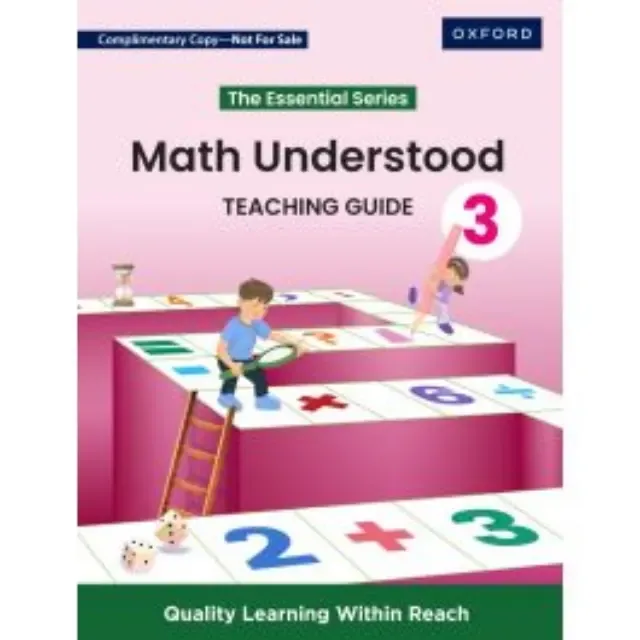
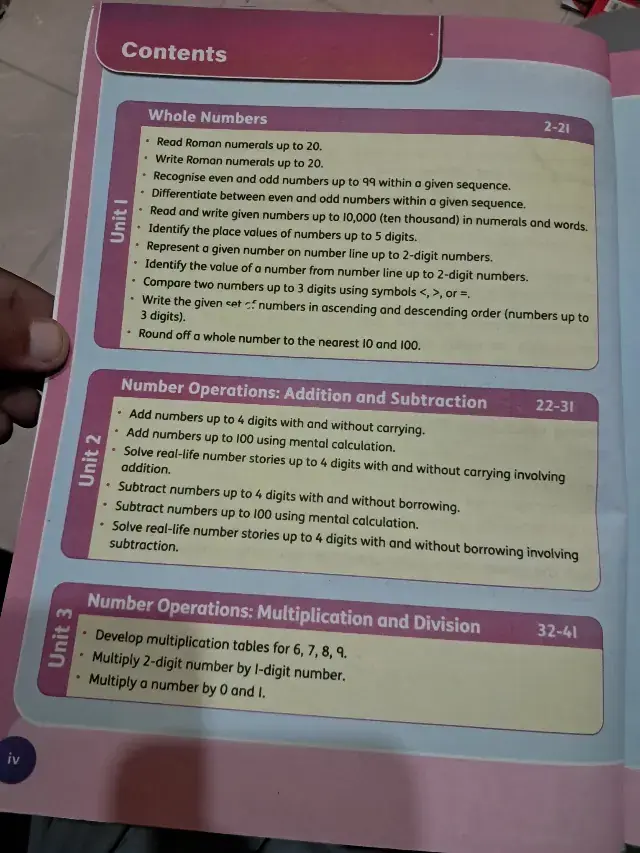
Oxford Math Understood 3 Teaching Guide (The Essential Series), for Class 3 maths teachers in session 2027-28: seven units (whole numbers, operations, fractions, measurement, time and geometry) with detailed student learning outcomes and page ranges.
ISBN: 9786275222194
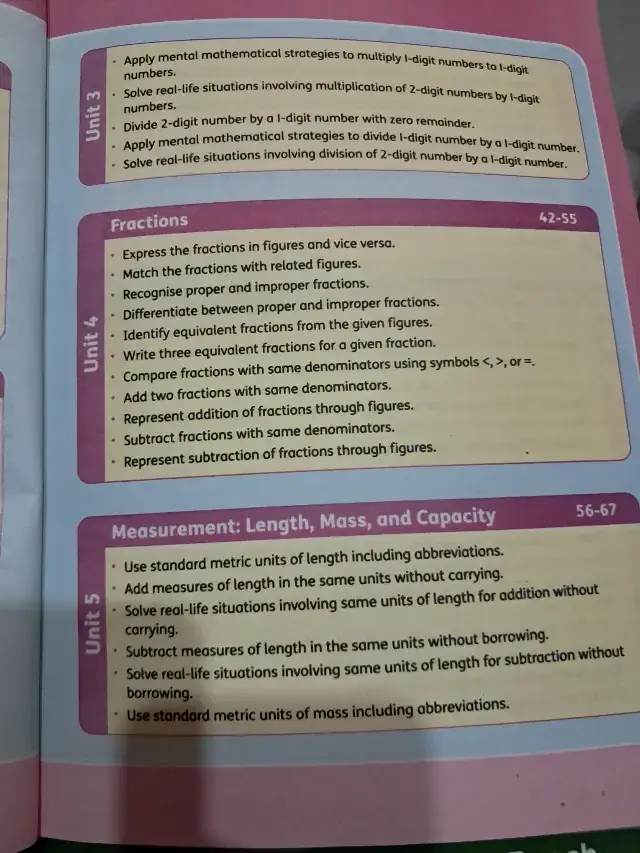
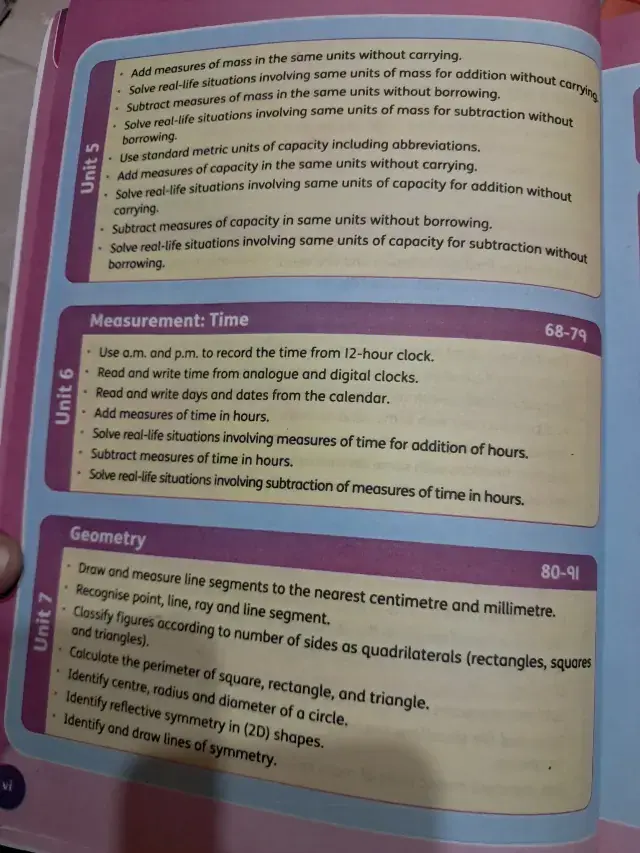
Oxford Math Understood 3 Teaching Guide (The Essential Series) is the teacher's book for Class 3 mathematics from Oxford University Press. Its contents page lists seven units with page ranges and the student learning outcomes of each unit: whole numbers (pages 2–21), addition and subtraction (22–31), multiplication and division (32–41), fractions (42–55), length, mass and capacity (56–67), time (68–79) and geometry (80–91). This page is written for the 2027-28 session. Exams Book House, Shop Number 4, Al Fazal Market, Urdu Bazar, Lahore, supplies it with cash on delivery across Pakistan and delivery to the Gulf countries.
A teaching guide is the book a maths teacher keeps on the desk. Math Understood 3 Teaching Guide follows the seven units of the Class 3 course and prints the student learning outcomes (SLOs) for each unit, so a teacher, a tutor or a parent can see exactly what a child must be able to do before moving on.
The outcomes are clear and practical: read and write numbers up to 10,000 in numerals and words, identify the place value of numbers up to 5 digits, round off a whole number to the nearest 10 and 100, add and subtract numbers up to 4 digits with and without carrying or borrowing, develop multiplication tables for 6, 7, 8 and 9, multiply a 2-digit number by a 1-digit number, divide a 2-digit number by a 1-digit number with zero remainder, recognise proper and improper fractions, identify equivalent fractions, add and subtract fractions with the same denominator, read and write time using a.m. and p.m., calculate the perimeter of a square, rectangle and triangle and identify lines of symmetry.
Because the guide is built around outcomes, it is also useful for planning lessons, setting tests and checking homework.
| Unit | Title | Pages | Student learning outcomes (examples) |
|---|---|---|---|
| 1 | Whole Numbers | 2–21 | read and write Roman numerals up to 20; recognise even and odd numbers up to 99; read and write numbers up to 10,000 in numerals and words; place value up to 5 digits; represent numbers on a number line; compare two numbers up to 3 digits with <, > or =; write numbers in ascending and descending order; round off to the nearest 10 and 100 |
| 2 | Number Operations: Addition and Subtraction | 22–31 | add numbers up to 4 digits with and without carrying; mental addition up to 100; real-life number stories up to 4 digits; subtract numbers up to 4 digits with and without borrowing; mental subtraction up to 100 |
| 3 | Number Operations: Multiplication and Division | 32–41 | multiplication tables for 6, 7, 8 and 9; multiply a 2-digit number by a 1-digit number; multiply a number by 0 and 1; mental strategies; real-life multiplication; divide a 2-digit number by a 1-digit number with zero remainder; mental division; real-life division |
| 4 | Fractions | 42–55 | express fractions in figures and vice versa; match fractions with related figures; proper and improper fractions; equivalent fractions and writing three equivalent fractions; compare fractions with the same denominator using <, > or =; add and subtract two fractions with the same denominator and show them with figures |
| 5 | Measurement: Length, Mass, and Capacity | 56–67 | standard metric units of length with abbreviations; add and subtract lengths in the same units; real-life situations with length; standard metric units of mass with abbreviations; add and subtract masses; units of capacity; add and subtract capacities |
| 6 | Measurement: Time | 68–79 | use a.m. and p.m. to record time from a 12-hour clock; read and write time from analogue and digital clocks; read and write days and dates from the calendar; add and subtract measures of time in hours; real-life problems on time |
| 7 | Geometry | 80–91 | draw and measure line segments to the nearest centimetre and millimetre; recognise a point, line, ray and line segment; classify figures by number of sides (quadrilaterals and triangles); calculate the perimeter of a square, rectangle and triangle; identify the centre, radius and diameter of a circle; reflective symmetry and lines of symmetry in 2D shapes |
Numbers and operations (units 1 to 3, pages 2–41). Unit 1 is the longest of the three with 20 pages: it builds numbers up to 10,000, place value to five digits, rounding and Roman numerals. Addition and subtraction (10 pages) and multiplication and division (10 pages) follow. Children now work with tables of 6, 7, 8 and 9 and with 4-digit sums.
Fractions (unit 4, pages 42–55). The biggest unit after whole numbers, with 14 pages. Class 3 is where fractions become a real topic: proper and improper, equivalent, comparing, and adding and subtracting with the same denominator.
Measuring and time (units 5 and 6, pages 56–79). Metric length, mass and capacity with abbreviations (12 pages) and time (12 pages) with a.m., p.m. and the calendar.
Shapes (unit 7, pages 80–91). Lines, quadrilaterals and triangles, perimeter, the parts of a circle and symmetry.
Who: Class 3 (Grade 3) maths teachers and tutors in schools that use Oxford Math Understood, and parents who want to follow the course. When: through the school year. Units 1 to 3 are usually the first term, units 4 and 5 the middle and units 6 and 7 the last term. Page numbers: fractions start on page 42, measurement on 56, time on 68 and geometry on 80.
If your school's 2027-28 Class 3 list names Math Understood 3 Teaching Guide by Oxford University Press, this is the book: look for the words "Teaching Guide", the round 3 and "The Essential Series" on the pink cover. Lists can change from year to year, so send yours on WhatsApp and we will match it. We supply the newest edition; ask us which edition is current.
oxford math understood 3 teaching guide · math understood teaching guide class 3 · essential series maths 3 · oxford maths teacher guide · میتھ انڈرسٹوڈ 3 ٹیچنگ گائیڈ · class 3 maths book lahore · urdu bazar lahore school books · session 2027-28
It is Oxford Math Understood 3 Teaching Guide (The Essential Series), the teacher's book for Class 3 maths. If your school's 2027-28 Class 3 list names it, this is the right book. Send the list on WhatsApp and we will check it.
Seven units on pages 2 to 91, from Whole Numbers to Geometry.
It is a Teaching Guide, written for teachers. It lists the student learning outcomes of every unit.
No. The number on the cover is the class. Use the book named on your list.
Yes. We deliver all over Pakistan with cash on delivery, and to the Gulf countries. Send your name, address and the book name on WhatsApp at 0317 4846676, or call the shop in Urdu Bazar, Lahore (Monday to Saturday, 9 AM – 9 PM).