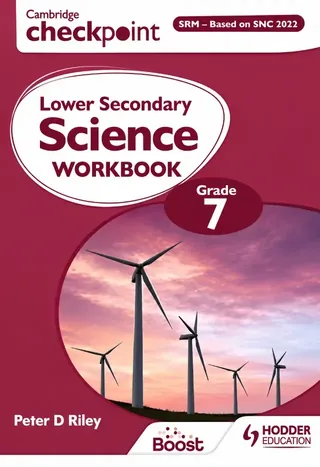
Allied School Class 4 – Science Nature Lab Book 4 (2027-28)
AEP | Arvo Education Press
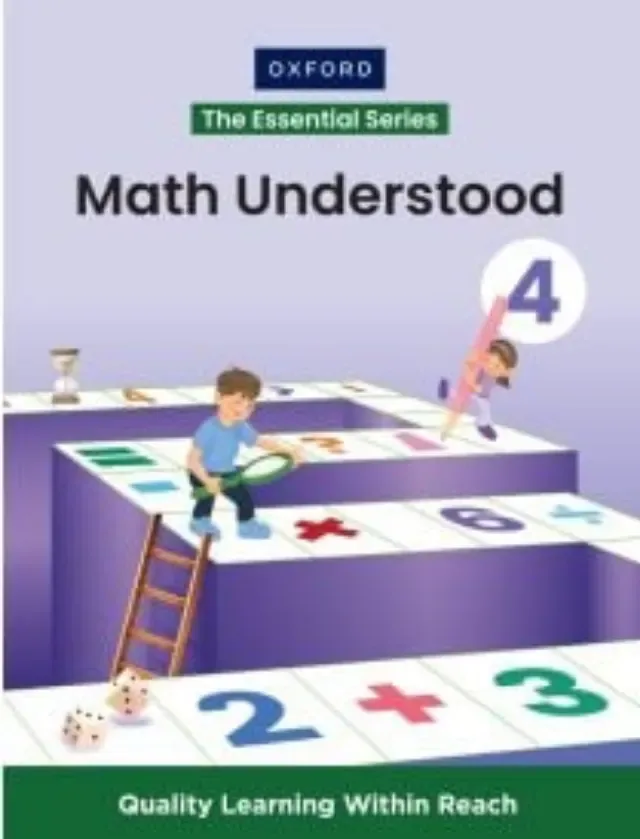
Oxford Math Understood 4 (The Essential Series), the Class 4 maths book for session 2027-28: eleven units (place value, operations, factors and multiples, fractions, decimals, measurement, time, geometry and data handling) with detailed learning outcomes.
ISBN: 9786275222200
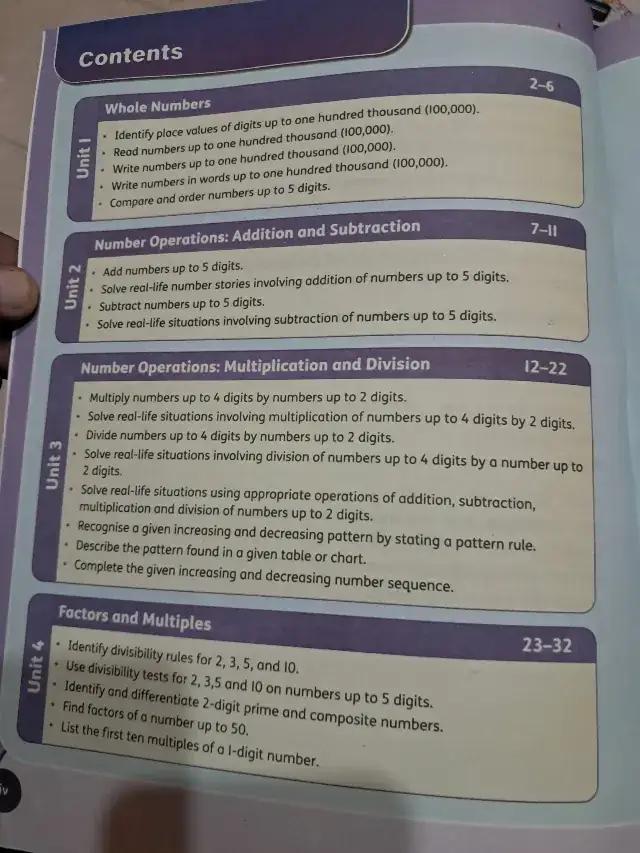
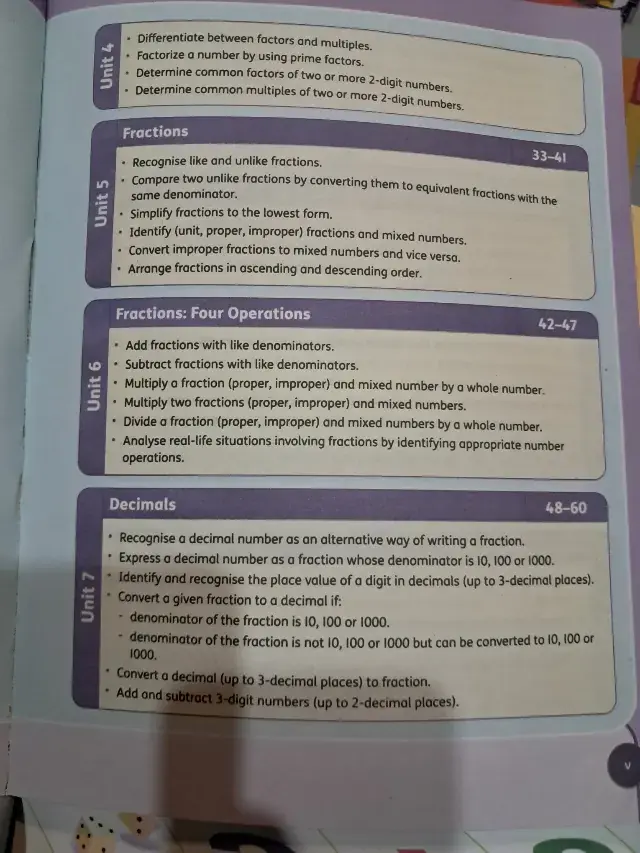
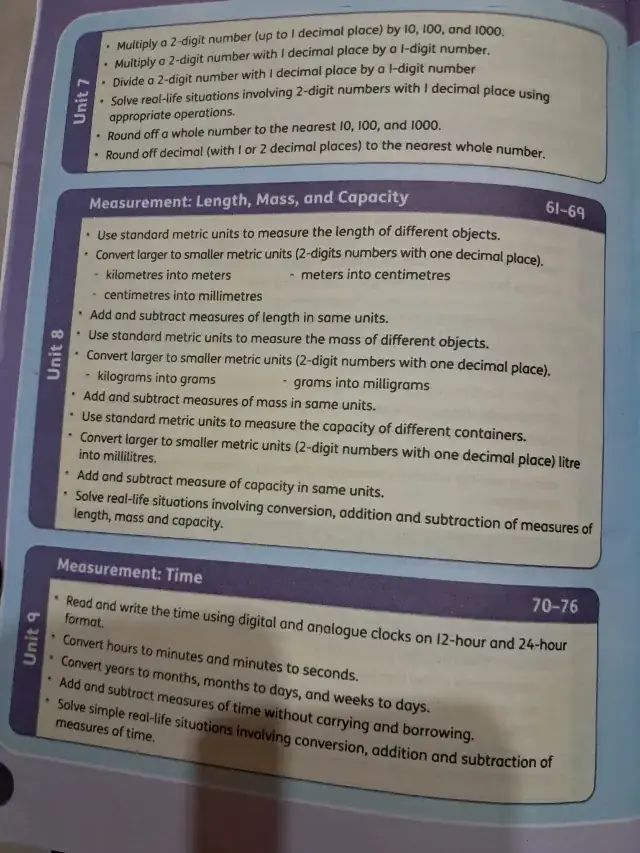
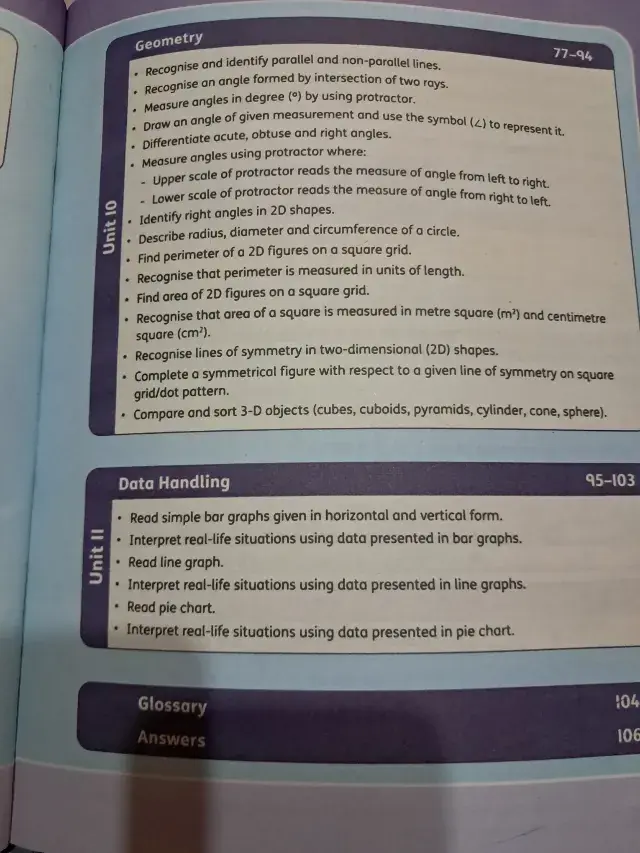
Oxford Math Understood 4 (The Essential Series) is the Class 4 mathematics book of Oxford University Press. Its contents page lists eleven units with page ranges and student learning outcomes: whole numbers (pages 2–6), addition and subtraction (7–11), multiplication and division (12–22), factors and multiples (23–32), fractions (33–41), fractions: four operations (42–47), decimals (48–60), measurement (61–69), time (70–76), geometry (77–94) and data handling (95–103), then a glossary on page 104 and answers on page 106. This page is written for the 2027-28 session. Exams Book House, Shop Number 4, Al Fazal Market, Urdu Bazar, Lahore, supplies it with cash on delivery across Pakistan and delivery to the Gulf countries.
Math Understood 4 is a Class 4 book built on the Single National Curriculum-style learning outcomes. Its eleven units are short and focused: only 5 pages on whole numbers and on addition and subtraction (a quick revision of Class 3), then a 11-page unit on multiplication and division of numbers up to 4 digits by 2-digit numbers, a 10-page unit on factors and multiples and then a long run on fractions and decimals.
The learning outcomes tell a lot: identify place values up to one hundred thousand, multiply numbers up to 4 digits by numbers up to 2 digits, identify divisibility rules for 2, 3, 5 and 10, factorize a number by using prime factors, recognise like and unlike fractions, simplify fractions to the lowest form, convert improper fractions to mixed numbers, express a decimal number as a fraction, convert larger to smaller metric units, read time in 12-hour and 24-hour format and read bar graphs, line graphs and pie charts.
The book ends with a glossary (page 104) and answers (page 106).
| Unit | Title | Pages | Student learning outcomes (examples) |
|---|---|---|---|
| 1 | Whole Numbers | 2–6 | place values up to one hundred thousand (100,000); read, write and compare numbers up to 5 digits |
| 2 | Number Operations: Addition and Subtraction | 7–11 | add and subtract numbers up to 5 digits; number stories |
| 3 | Number Operations: Multiplication and Division | 12–22 | multiply up to 4-digit numbers by up to 2 digits; divide up to 4-digit numbers by 2-digit numbers; real-life situations; increasing and decreasing patterns and sequences |
| 4 | Factors and Multiples | 23–32 | divisibility rules for 2, 3, 5 and 10; prime and composite numbers; factors of a number up to 50; multiples of a 1-digit number; common factors and multiples; prime factorization |
| 5 | Fractions | 33–41 | like and unlike fractions; compare fractions by converting to equivalent fractions; simplify to the lowest form; unit, proper and improper fractions and mixed numbers; ascending and descending order |
| 6 | Fractions: Four Operations | 42–47 | add and subtract fractions with like denominators; multiply and divide fractions and mixed numbers by a whole number; multiply two fractions; real-life problems |
| 7 | Decimals | 48–60 | a decimal as a fraction; place value in decimals up to 3 places; convert fractions to decimals and back; add and subtract decimals; multiply and divide by 10, 100, 1000; round off |
| 8 | Measurement: Length, Mass, and Capacity | 61–69 | metric units; convert larger to smaller units (km to m, m to cm, cm to mm; kg to g, g to mg; litre to ml); add and subtract measures |
| 9 | Measurement: Time | 70–76 | read time in 12-hour and 24-hour format; hours to minutes and minutes to seconds; years to months, months to days, weeks to days; add and subtract time |
| 10 | Geometry | 77–94 | parallel and non-parallel lines; angles and a protractor (acute, obtuse, right); radius, diameter and circumference; perimeter and area on a square grid (m², cm²); lines of symmetry; 3D objects (cubes, cuboids, pyramids, cylinders, cones, spheres) |
| 11 | Data Handling | 95–103 | read bar graphs (horizontal and vertical); read line graphs; read pie charts and interpret them in real-life situations |
| Glossary | 104 | maths words | |
| Answers | 106 | answers to exercises |
Numbers (units 1 to 3, pages 2–22). A fast revision of whole numbers, addition and subtraction (5 pages each) followed by multiplication and division (11 pages).
Factors and fractions (units 4 to 6, pages 23–47). Divisibility tests, prime and composite numbers and common factors, then fractions in two units: concepts (9 pages) and the four operations (6 pages).
Decimals and measures (units 7 to 9, pages 48–76). Decimals are the biggest of the three with 13 pages. Metric conversions and time (with the 24-hour clock) follow.
Geometry and data (units 10 and 11, pages 77–103). Geometry is the longest unit in the book with 18 pages (angles, circle, perimeter and area, symmetry and 3D objects). Data handling (9 pages) ends the book with graphs and pie charts.
Who: Class 4 (Grade 4) students in schools that use Oxford Math Understood, and parents who help with homework. When: through the school year. Units 1 to 4 are usually the first term, units 5 to 8 the middle and units 9 to 11 the last term. Page numbers: factors and multiples start on page 23, fractions on 33, decimals on 48, geometry on 77 and data handling on 95.
If your school's 2027-28 Class 4 list names Math Understood 4 by Oxford University Press, this is the book: look for the lavender cover, the round 4 and "The Essential Series" on the cover. Lists can change from year to year, so send yours on WhatsApp and we will match it. We supply the newest edition; ask us which edition is current.
oxford math understood 4 · math understood class 4 · essential series maths 4 · oxford maths class 4 · میتھ انڈرسٹوڈ 4 · class 4 maths book lahore · urdu bazar lahore school books · session 2027-28
It is Oxford Math Understood 4 (The Essential Series). If your school's 2027-28 Class 4 list names it, this is the right book. Send the list on WhatsApp and we will check it.
Eleven units on pages 2 to 103, a glossary on page 104 and answers on page 106.
Yes. Factors and multiples are unit 4 (pages 23–32) and decimals are unit 7 (pages 48–60).
No. The series and the number on the cover are different. Use the book named on your child's list.
Yes. We deliver all over Pakistan with cash on delivery, and to the Gulf countries. Send your name, address and the book name on WhatsApp at 0317 4846676, or call the shop in Urdu Bazar, Lahore (Monday to Saturday, 9 AM – 9 PM).