Allied School Class 4 – Science Nature Lab Book 4 (2027-28)
AEP | Arvo Education Press
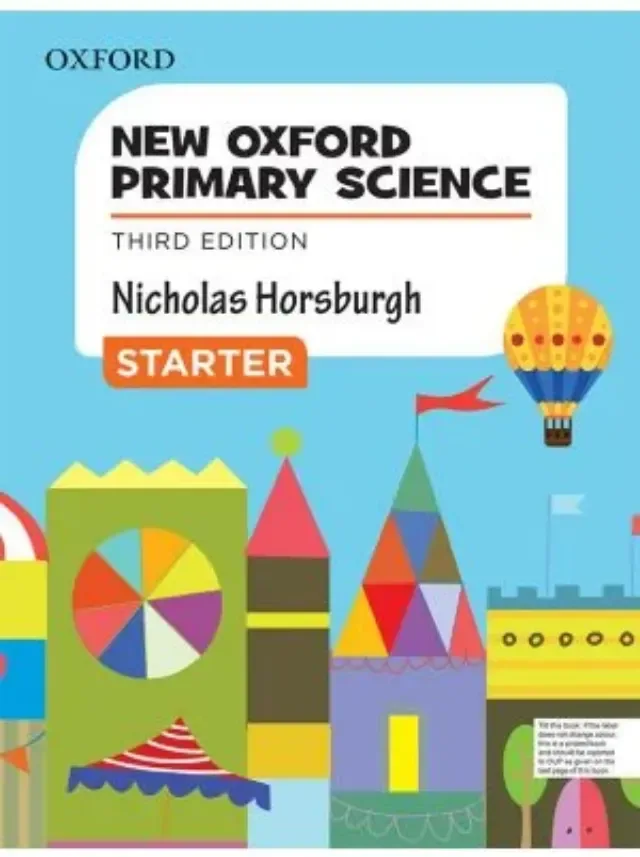
New Oxford Primary Science Starter (Third Edition) by Nicholas Horsburgh, for session 2027-28: fourteen short units in six parts, from My Body and Animals to Light, Air, the Weather and the Sky, with learning outcomes and activity pages.
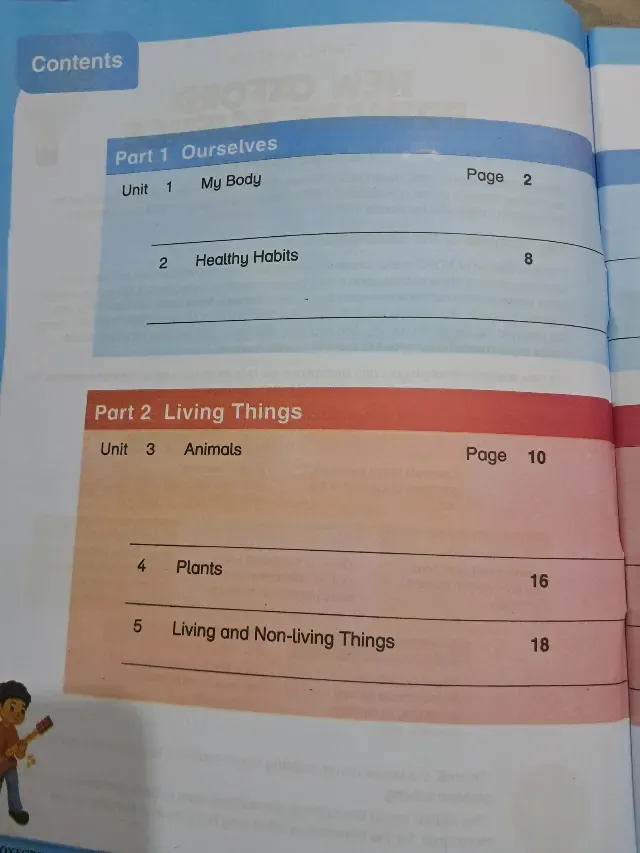
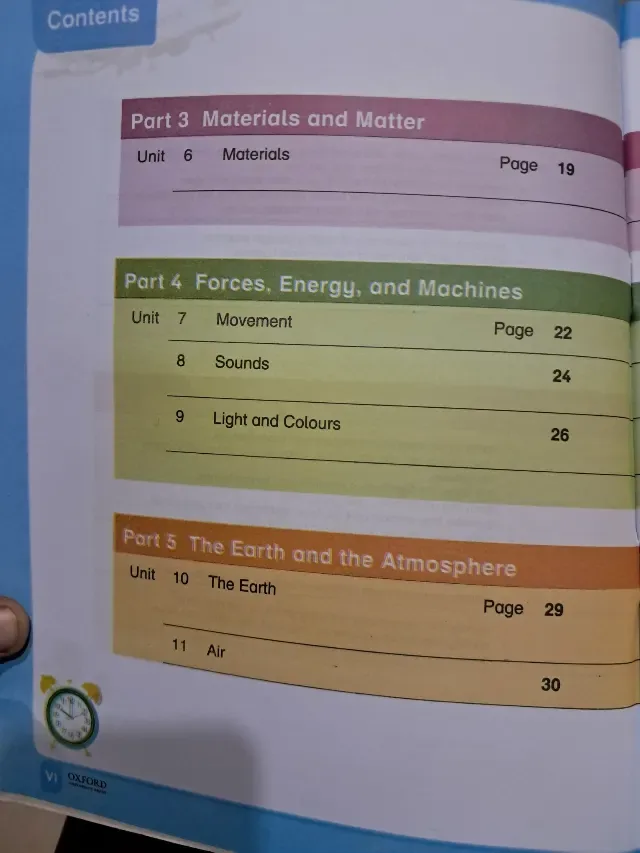
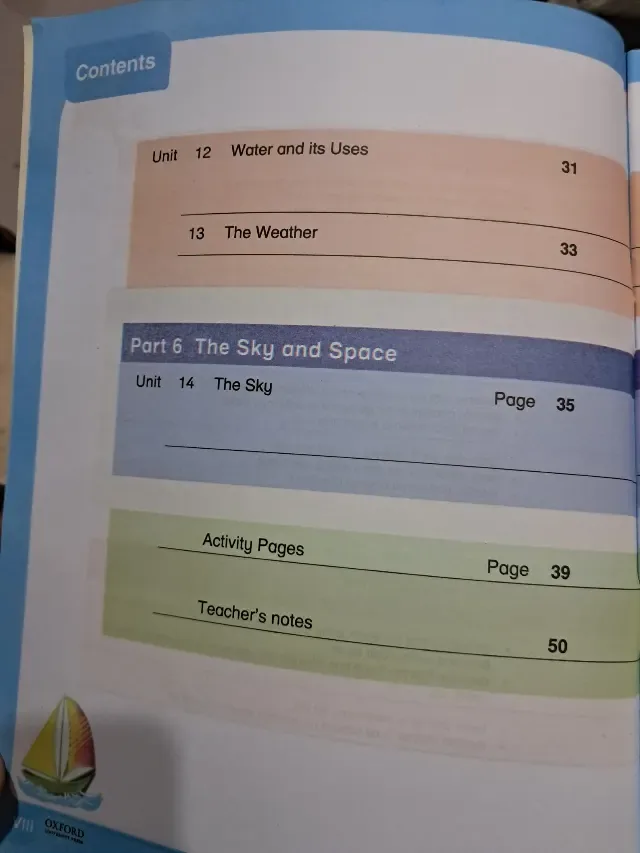
New Oxford Primary Science Starter (Third Edition) by Nicholas Horsburgh is the first book of the primary science series of Oxford University Press, for the youngest learners. Its contents show fourteen units in six parts: Ourselves, Living Things, Materials and Matter, Forces, Energy and Machines, The Earth and the Atmosphere, and The Sky and Space, followed by Activity Pages (page 39) and Teacher's notes (page 50). A box of student learning outcomes opens each part. This page is written for the 2027-28 session. Exams Book House, Shop Number 4, Al Fazal Market, Urdu Bazar, Lahore, supplies it with cash on delivery across Pakistan and delivery to the Gulf countries.
Starter is the gentlest book of the New Oxford Primary Science series, written for children who are just beginning science. It has only 38 pages of units and uses the same six "parts" as the higher books (Ourselves, Living Things, Materials and Matter, Forces, Energy and Machines, The Earth and the Atmosphere, The Sky and Space), so a child who starts here knows the shape of the series.
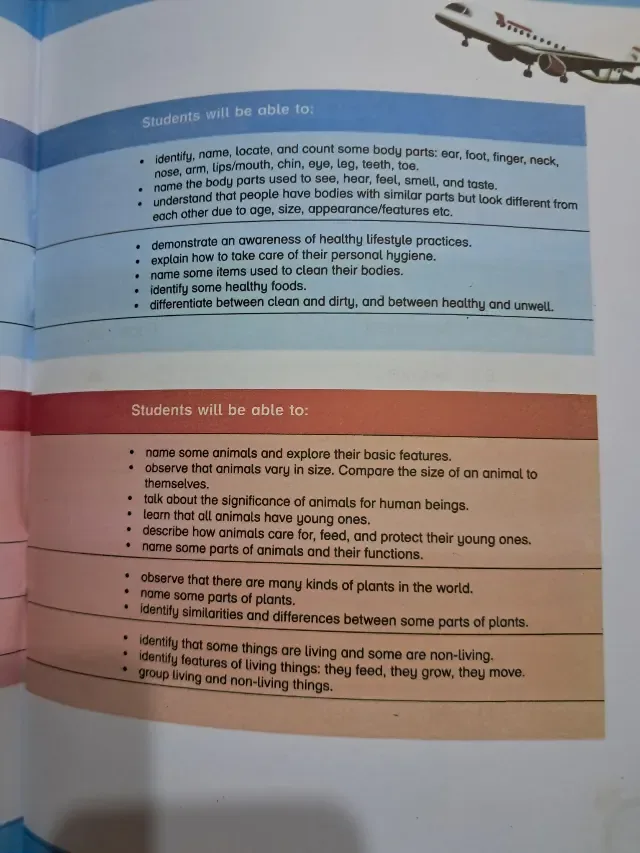
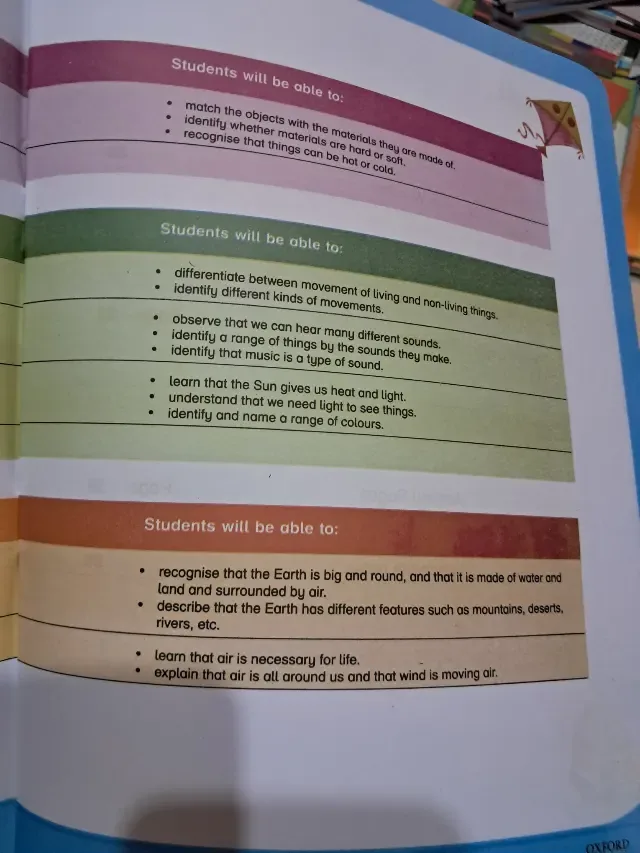
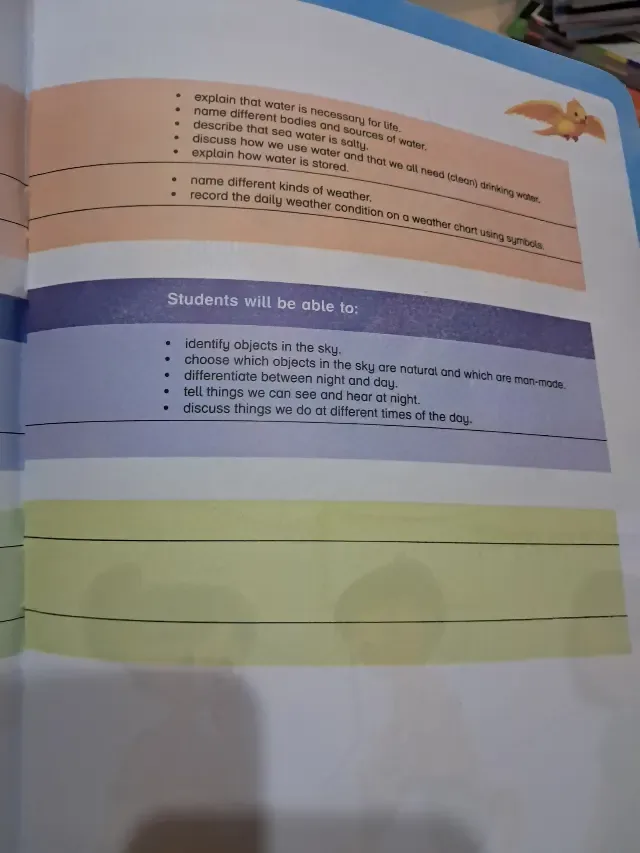
Each unit is very short (usually 2 to 6 pages). The learning outcomes show how simple the goals are: identify, name, locate and count some body parts, name animals and explore their basic features, identify that some things are living and some are non-living, match objects with the materials they are made of, observe that we can hear many different sounds, name and identify a range of colours, recognise that the Earth is big and round, learn that air is necessary for life, name different kinds of weather and tell things we can see and hear at night.
The book ends with Activity Pages (page 39) and Teacher's notes (page 50). There is no glossary, because a Starter learner needs pictures more than words.
| Part | Unit | Title | Page |
|---|---|---|---|
| 1 Ourselves | 1 | My Body | 2 |
| 1 Ourselves | 2 | Healthy Habits | 8 |
| 2 Living Things | 3 | Animals | 10 |
| 2 Living Things | 4 | Plants | 16 |
| 2 Living Things | 5 | Living and Non-living Things | 18 |
| 3 Materials and Matter | 6 | Materials | 19 |
| 4 Forces, Energy, and Machines | 7 | Movement | 22 |
| 4 Forces, Energy, and Machines | 8 | Sounds | 24 |
| 4 Forces, Energy, and Machines | 9 | Light and Colours | 26 |
| 5 The Earth and the Atmosphere | 10 | The Earth | 29 |
| 5 The Earth and the Atmosphere | 11 | Air | 30 |
| 5 The Earth and the Atmosphere | 12 | Water and its Uses | 31 |
| 5 The Earth and the Atmosphere | 13 | The Weather | 33 |
| 6 The Sky and Space | 14 | The Sky | 35 |
| Activity Pages | 39 | ||
| Teacher's notes | 50 |
Who: the youngest primary learners in schools that use New Oxford Primary Science, and their parents. When: through the school year, one short unit every one or two weeks. Page numbers: materials start on page 19, sounds on page 24, the weather on page 33 and the sky on page 35.
If your school's 2027-28 KG list names New Oxford Primary Science Starter by Oxford University Press, this is the book: look for the orange Starter label and the name Nicholas Horsburgh on the cover. Lists can change from year to year, so send yours on WhatsApp and we will match it. We supply the newest edition; ask us which edition is current.
new oxford primary science starter · primary science starter oxford · nicholas horsburgh starter · oxford science kg · نیو آکسفورڈ پرائمری سائنس اسٹارٹر · kg science book lahore · urdu bazar lahore school books · session 2027-28
It is New Oxford Primary Science, Starter (Third Edition) by Nicholas Horsburgh. If your school's 2027-28 list names it, this is the right book. Send the list on WhatsApp and we will check it.
Fourteen units in six parts, from My Body (page 2) to The Sky (page 35), then Activity Pages (page 39) and Teacher's notes (page 50).
Starter is the first level of the series, for the youngest learners. Send your school's 2027-28 list on WhatsApp and we will check which class it is used in.
Yes. A box of student learning outcomes opens each part, for example "name some animals and explore their basic features".
Yes. We deliver all over Pakistan with cash on delivery, and to the Gulf countries. Send your name, address and the book name on WhatsApp at 0317 4846676, or call the shop in Urdu Bazar, Lahore (Monday to Saturday, 9 AM – 9 PM).