Allied School Class 4 – Science Nature Lab Book 4 (2027-28)
AEP | Arvo Education Press
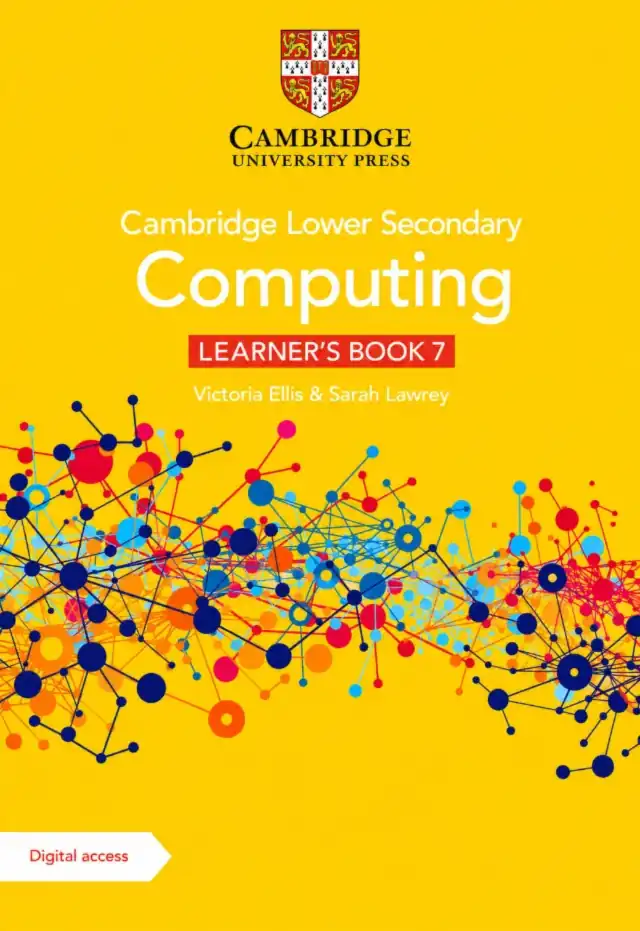
Cambridge Lower Secondary Computing Learner's Book 7 by Victoria Ellis and Sarah Lawrey (Cambridge University Press) for Class 7 in session 2027-28: four units on programming and flowcharts, managing data, networks and computer systems, with a glossary.
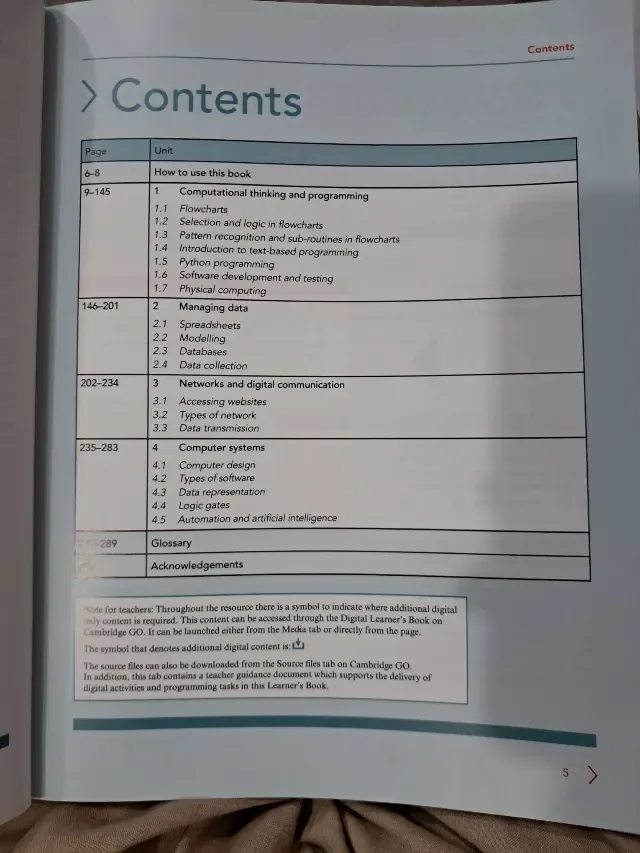
Cambridge Lower Secondary Computing Learner's Book 7 by Victoria Ellis and Sarah Lawrey is the Class 7 computing course book of Cambridge University Press. Its contents list four units: Computational thinking and programming (pages 9–145), Managing data (146–201), Networks and digital communication (202–234) and Computer systems (235–283), followed by a glossary. The course includes flowcharts, Python and physical computing. This page is written for the 2027-28 session. Exams Book House, Shop Number 4, Al Fazal Market, Urdu Bazar, Lahore, supplies it with cash on delivery across Pakistan and delivery to the Gulf countries.
Computing in Class 7 is more than typing. This book teaches children to think like a programmer, organise and model data, understand how networks work and see inside a computer. It is a big book of 283 pages, and about half of the pages are in unit 1.
Unit 1, Computational thinking and programming (pages 9–145), has seven sections: flowcharts, selection and logic in flowcharts, pattern recognition and sub-routines in flowcharts, an introduction to text-based programming, Python programming, software development and testing and physical computing. A student moves from drawing a flowchart to writing and testing a Python program.
Unit 2, Managing data (146–201), covers spreadsheets, modelling, databases and data collection. Unit 3, Networks and digital communication (202–234), covers accessing websites, types of network and data transmission. Unit 4, Computer systems (235–283), covers computer design, types of software, data representation, logic gates and automation and artificial intelligence.
A note for teachers on the contents page says that extra digital content is available through Cambridge GO, including source files and a teacher guidance document for the programming tasks.
| Unit | Title | Pages | Sections (as printed) |
|---|---|---|---|
| How to use this book | 6–8 | ||
| 1 | Computational thinking and programming | 9–145 | 1.1 Flowcharts; 1.2 Selection and logic in flowcharts; 1.3 Pattern recognition and sub-routines in flowcharts; 1.4 Introduction to text-based programming; 1.5 Python programming; 1.6 Software development and testing; 1.7 Physical computing |
| 2 | Managing data | 146–201 | 2.1 Spreadsheets; 2.2 Modelling; 2.3 Databases; 2.4 Data collection |
| 3 | Networks and digital communication | 202–234 | 3.1 Accessing websites; 3.2 Types of network; 3.3 Data transmission |
| 4 | Computer systems | 235–283 | 4.1 Computer design; 4.2 Types of software; 4.3 Data representation; 4.4 Logic gates; 4.5 Automation and artificial intelligence |
| Glossary and Acknowledgements | after 283 |
Unit 1 (137 pages). The programming unit is the heart of the book, with about half of all pages. It starts with flowcharts (a way to plan a program without code), moves to selection ("if ... then") and pattern recognition, and then to Python, testing and physical computing (programs that control real devices).
Unit 2 (56 pages). Spreadsheets, models, databases and the collection of data: the skills used in science, maths and business.
Unit 3 (33 pages). How a website is reached, the types of network and how data travels.
Unit 4 (49 pages). The inside of a computer: its design, its software, how numbers, text and pictures are stored in binary, logic gates and a first look at automation and artificial intelligence.
Who: Class 7 (Grade 7) students in schools that follow Cambridge Lower Secondary Computing. When: through the school year. Unit 1 is usually the first two terms, units 2 to 4 the remaining time. Page numbers: Python programming is section 1.5, managing data starts on page 146, networks on page 202 and computer systems on page 235.
If your school's 2027-28 Class 7 list names Cambridge Lower Secondary Computing Learner's Book 7 by Cambridge University Press, this is the book: look for the yellow cover with the colourful network picture, the words "Learner's Book 7" and the authors Victoria Ellis and Sarah Lawrey. Lists can change from year to year, so send yours on WhatsApp and we will match it. We supply the newest edition; ask us which edition is current.
cambridge lower secondary computing 7 · computing learner's book 7 · victoria ellis sarah lawrey · cambridge computing class 7 · کیمبرج کمپیوٹنگ 7 · class 7 computer book lahore · urdu bazar lahore school books · session 2027-28
It is Cambridge Lower Secondary Computing Learner's Book 7 by Victoria Ellis and Sarah Lawrey. If your school's 2027-28 Class 7 list names it, this is the right book. Send the list on WhatsApp and we will check it.
Four units on pages 9 to 283: programming, managing data, networks and computer systems, followed by a glossary.
Yes. Python programming is section 1.5 of unit 1, together with flowcharts, testing and physical computing.
No. They are two different computer courses for Class 7. Use the one named on your child's list.
Yes. We deliver all over Pakistan with cash on delivery, and to the Gulf countries. Send your name, address and the book name on WhatsApp at 0317 4846676, or call the shop in Urdu Bazar, Lahore (Monday to Saturday, 9 AM – 9 PM).