Allied School Class 4 – Science Nature Lab Book 4 (2027-28)
AEP | Arvo Education Press
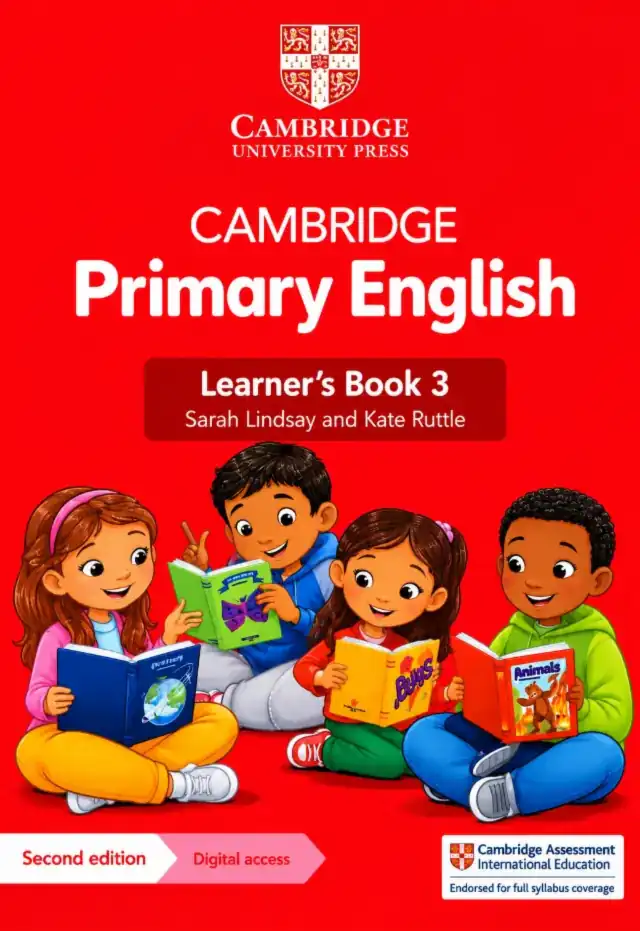
Cambridge Primary English Learner's Book 3 (2nd Edition) by Sarah Lindsay and Kate Ruttle (Cambridge University Press) for Class 3 in session 2027-28: nine units from story writing with Roald Dahl to poems, with spelling activities and a toolkit.
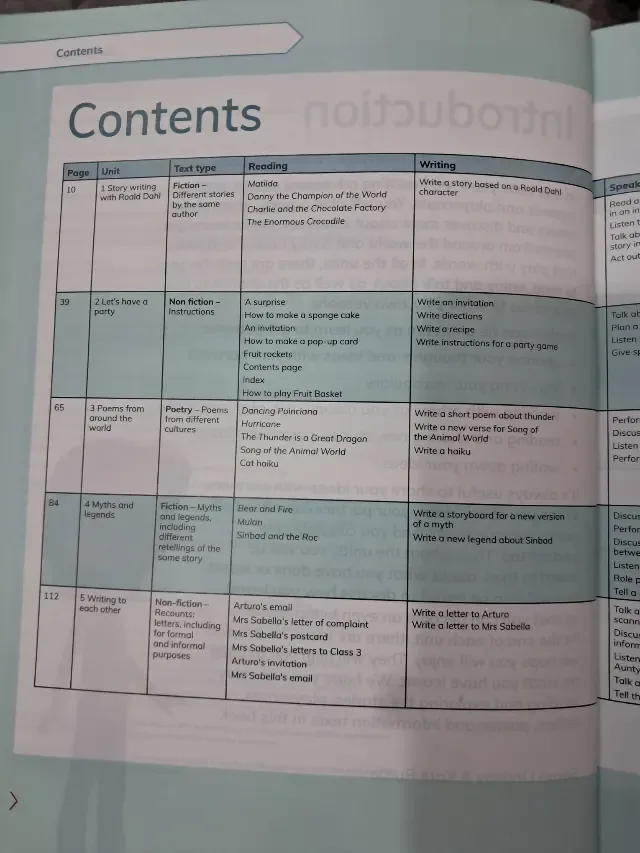
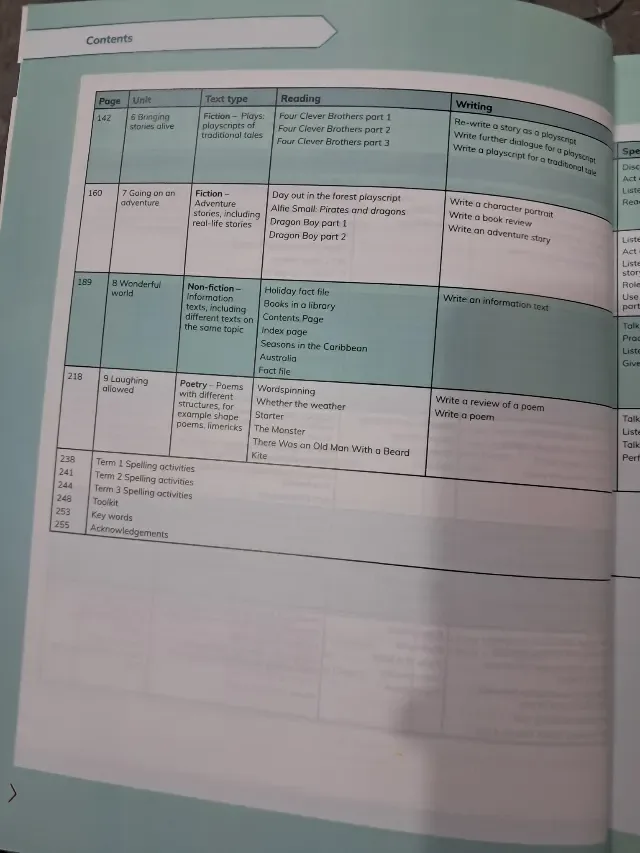
Cambridge Primary English Learner's Book 3 (2nd Edition) by Sarah Lindsay and Kate Ruttle is the Class 3 (Stage 3) English course book of Cambridge University Press. Its contents list nine units from Story writing with Roald Dahl (page 10) to Laughing allowed (page 218), followed by Spelling activities (page 238), a Toolkit (page 248), Key words (page 253) and acknowledgements (page 255). This page is written for the 2027-28 session. Exams Book House, Shop Number 4, Al Fazal Market, Urdu Bazar, Lahore, supplies it with cash on delivery across Pakistan and delivery to the Gulf countries.
Stage 3 is where children start reading real books and writing longer pieces. Learner's Book 3 is built around nine text types: stories by one author (Roald Dahl: Matilda, Danny the Champion of the World, Charlie and the Chocolate Factory, The Enormous Crocodile), instructions (a sponge cake, a pop-up card, fruit rockets), poems from around the world (Dancing Poinciana, Hurricane, The Thunder is a Great Dragon, Cat haiku), myths and legends (Bear and Fire, Mulan, Sinbad and the Roc), letters (formal and informal), playscripts of traditional tales (Four Clever Brothers), adventure stories (Alfie Small: Pirates and dragons, Dragon Boy), information texts (holiday fact files, Seasons in the Caribbean, Australia) and funny poems (limericks, shape poems, calligrams).
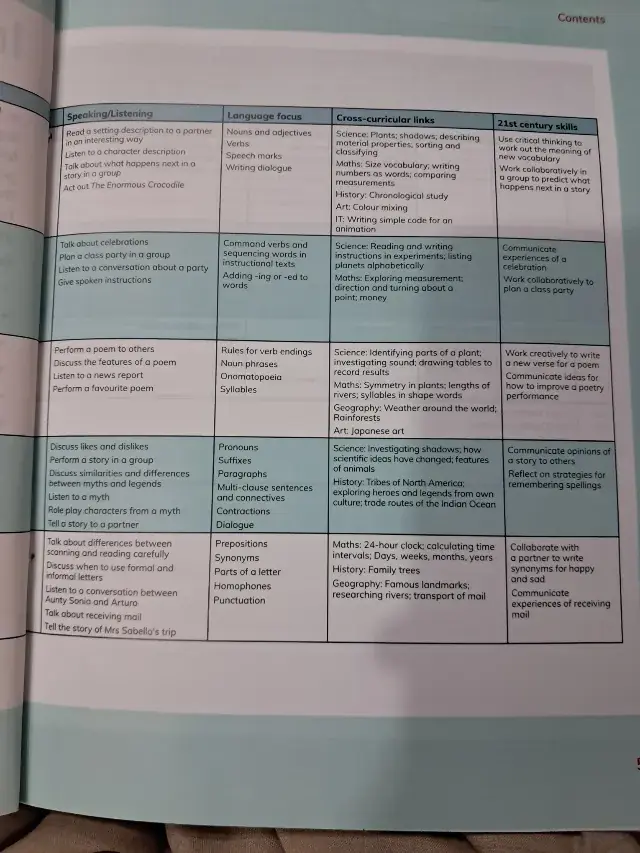
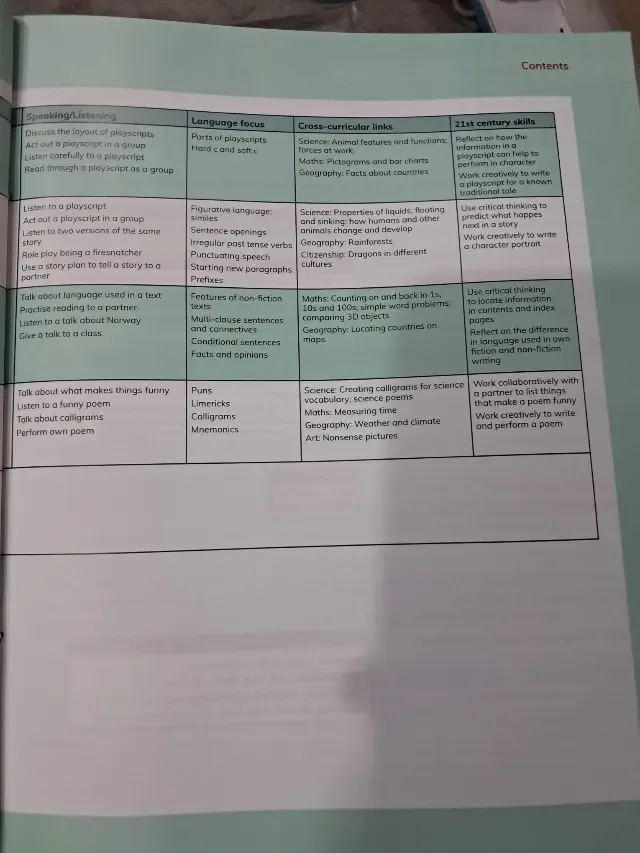
The contents grid is clear. For each unit it lists the reading texts, the writing tasks (a story, an invitation, a recipe, a haiku, a storyboard, a letter, a playscript, a book review, an information text), the speaking and listening work, the language focus (nouns and adjectives, verbs, speech marks, command verbs, prepositions, synonyms, homophones, similes, puns), the cross-curricular links and the 21st-century skills.
The last pages give a Toolkit and Spelling activities for each of the three terms, so the book works for the whole year.
| Unit | Title | Page | Text type and reading | Writing |
|---|---|---|---|---|
| 1 | Story writing with Roald Dahl | 10 | fiction: different stories by the same author: Matilda; Danny the Champion of the World; Charlie and the Chocolate Factory; The Enormous Crocodile | a story based on a Roald Dahl character |
| 2 | Let's have a party | 39 | non-fiction instructions: A surprise; How to make a sponge cake; An invitation; How to make a pop-up card; Fruit rockets; contents page; index; How to play Fruit Basket | an invitation; directions; a recipe; instructions for a party game |
| 3 | Poems from around the world | 65 | poetry from different cultures: Dancing Poinciana; Hurricane; The Thunder is a Great Dragon; Song of the Animal World; Cat haiku | a short poem about thunder; a new verse for Song of the Animal World; a haiku |
| 4 | Myths and legends | 84 | fiction: myths and legends, including different retellings of the same story: Bear and Fire; Mulan; Sinbad and the Roc | a storyboard for a new version of a myth; a new legend about Sinbad |
| 5 | Writing to each other | 112 | non-fiction: letters including formal and informal: Arturo's email; Mrs Sabella's letter of complaint, postcard and letters to Class 3; Arturo's invitation | a letter to Arturo; a letter to Mrs Sabella |
| 6 | Bringing stories alive | 142 | fiction: plays, playscripts of traditional tales: Four Clever Brothers parts 1, 2 and 3 | re-write a story as a playscript; write a playscript for a traditional tale |
| 7 | Going on an adventure | 160 | fiction: adventure stories, including real-life stories: Day out in the forest playscript; Alfie Small: Pirates and dragons; Dragon Boy parts 1 and 2 | a character portrait; a book review; an adventure story |
| 8 | Wonderful world | 189 | non-fiction: information texts on the same topic: Holiday fact file; Books in a library; contents page; index page; Seasons in the Caribbean; Australia; fact file | an information text |
| 9 | Laughing allowed | 218 | poetry: poems with different structures, for example shape poems and limericks: Wordspinning; Whether the weather; Starter; The Monster; There Was an Old Man With a Beard; Kite | a review of a poem; a poem |
| Term 1, Term 2 and Term 3 Spelling activities | 238, 241, 244 | |||
| Toolkit; Key words; Acknowledgements | 248; 253; 255 |
| Unit | Language focus (as printed) |
|---|---|
| 1 | nouns and adjectives; verbs; speech marks; writing dialogue |
| 2 | command verbs and sequencing words in instructional texts; adding -ing or -ed to words |
| 3 | rules for verb endings; noun phrases; onomatopoeia; syllables |
| 4 | pronouns; suffixes; paragraphs; multi-clause sentences and connectives; contractions; dialogue |
| 5 | prepositions; synonyms; parts of a letter; homophones; punctuation |
| 6 | parts of playscripts; hard c and soft c |
| 7 | figurative language: similes; sentence openings; irregular past tense verbs; punctuating speech; starting new paragraphs; prefixes |
| 8 | features of non-fiction texts; multi-clause sentences and connectives; conditional sentences; facts and opinions |
| 9 | puns; limericks; calligrams; mnemonics |
Units 1 to 3 (pages 10–83). Stories, instructions and poems. The child writes a story, a recipe and a haiku.
Units 4 to 6 (pages 84–159). Myths, letters and playscripts. Retelling a myth in a storyboard, writing a formal letter and turning a traditional tale into a play.
Units 7 to 9 (pages 160–237). Adventure, information and humour. A character portrait, an information text and funny poems, with the spelling activities and toolkit at the end.
Who: Class 3 (Stage 3) children in schools that follow the Cambridge Primary English programme. When: through the school year. Units 1 to 3 are usually the first term, units 4 to 6 the middle and units 7 to 9 the last term. Page numbers: unit 5 starts on page 112, unit 8 on page 189 and the toolkit on page 248.
If your school's 2027-28 Class 3 list names Cambridge Primary English Learner's Book 3 by Cambridge University Press, this is the book: look for the red cover with four children reading, the number 3 and the authors Sarah Lindsay and Kate Ruttle. Lists can change from year to year, so send yours on WhatsApp and we will match it. We supply the newest edition; ask us which edition is current.
cambridge primary english learner's book 3 · cambridge primary english stage 3 · sarah lindsay kate ruttle · cambridge english class 3 · کیمبرج پرائمری انگلش 3 · class 3 english book lahore · urdu bazar lahore school books · session 2027-28
It is Cambridge Primary English Learner's Book 3 (2nd Edition) by Sarah Lindsay and Kate Ruttle. If your school's 2027-28 Class 3 list names it, this is the right book. Send the list on WhatsApp and we will check it.
Nine units, from Story writing with Roald Dahl (page 10) to Laughing allowed (page 218), plus spelling activities (page 238) and a toolkit (page 248).
Yes. There are Term 1, Term 2 and Term 3 spelling activities on pages 238 to 247.
No. The number on the cover is the stage. Use the book named on your child's list.
Yes. We deliver all over Pakistan with cash on delivery, and to the Gulf countries. Send your name, address and the book name on WhatsApp at 0317 4846676, or call the shop in Urdu Bazar, Lahore (Monday to Saturday, 9 AM – 9 PM).