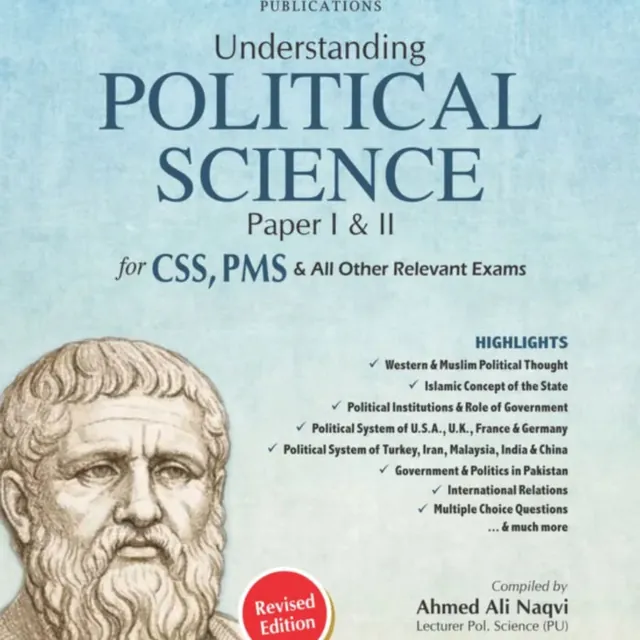
Understanding Political Science Paper I & II – CSS/PMS 2027-28 (Naqvi)
Ahmed Ali Naqvi’s complete Political Science guide (Paper I & II) for CSS, PMS and PPSC 2027-28 — Western & Muslim political thought, comparative politics and Pakistan’s political system.
Key details
- CSS, PMS & PPSC
- Paper I & II
- Full FPSC syllabus
- CSS & PMS 2027-28
Understanding Political Science, Paper I & II, compiled by Ahmed Ali Naqvi (Lecturer, Political Science, Punjab University), is a complete guide to the Political Science optional subject for CSS, PMS, PPSC and other competitive examinations. It covers both papers of the FPSC syllabus in full, from classical political philosophy through to the constitutional history of Pakistan. It is written for candidates preparing for CSS 2027, CSS 2028 and the PMS / PPSC exams of the 2027-28 cycle.
Paper I — Part A: Western & Muslim Political Thought
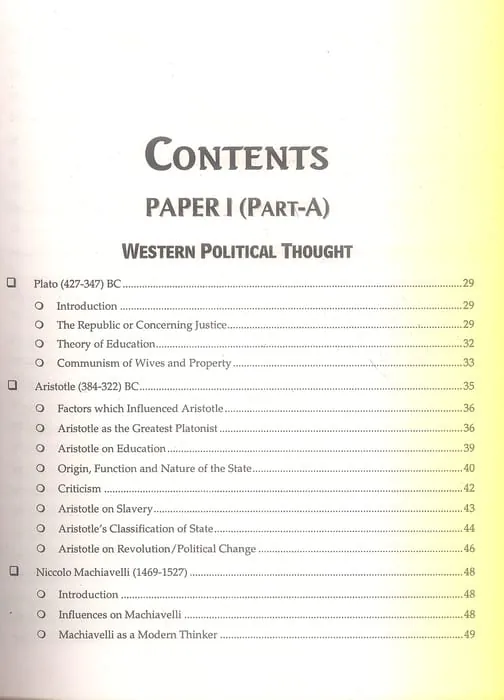
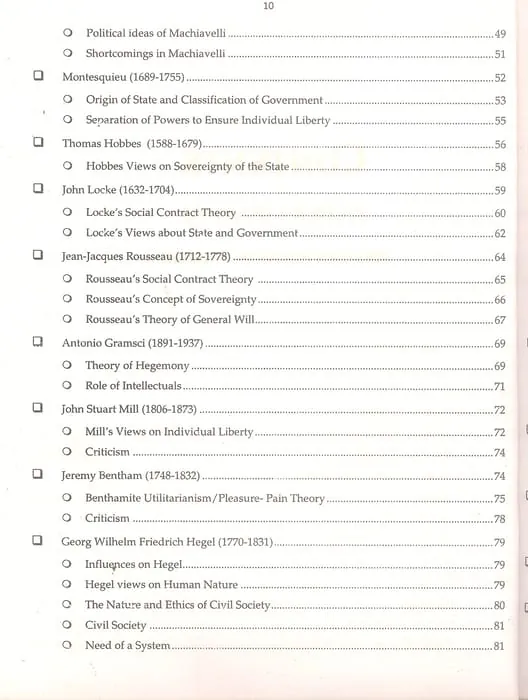
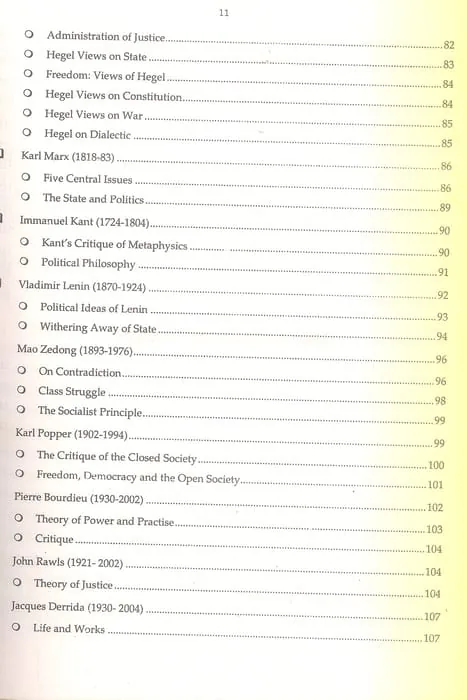
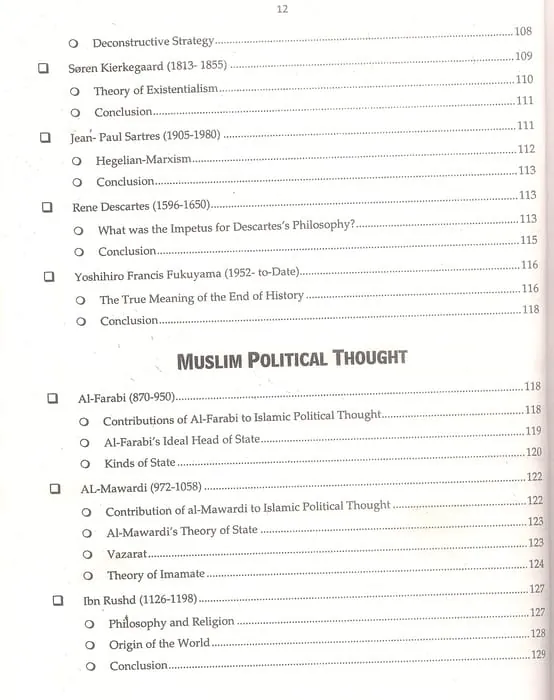
Western Political Thought runs from the classical era to contemporary theory: Plato, Aristotle, Niccolo Machiavelli, Montesquieu, Thomas Hobbes, John Locke, Jean-Jacques Rousseau, Antonio Gramsci, John Stuart Mill, Jeremy Bentham, Georg Wilhelm Friedrich Hegel, Karl Marx, Immanuel Kant, Vladimir Lenin, Mao Zedong, Karl Popper, Pierre Bourdieu, John Rawls, Jacques Derrida, Søren Kierkegaard, Jean-Paul Sartre, René Descartes and Yoshihiro Francis Fukuyama — each thinker covered through their key ideas (for example, Locke's Social Contract Theory, Rousseau's Theory of General Will, Marx's Five Central Issues, or Fukuyama's "End of History").
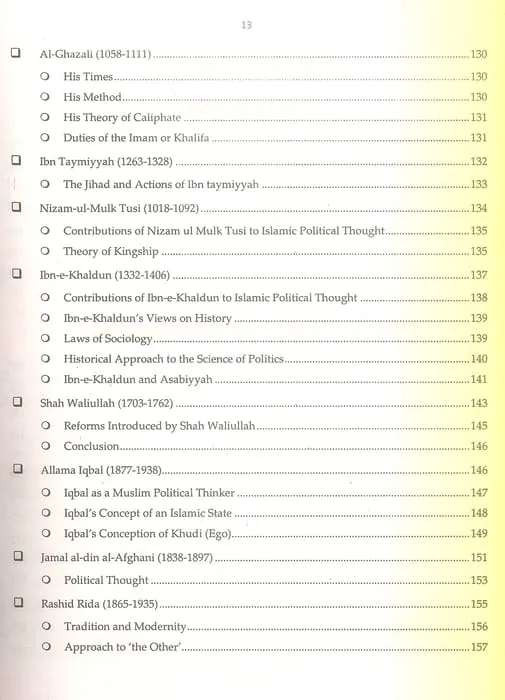
Muslim Political Thought covers Al-Farabi, Al-Mawardi, Ibn Rushd, Al-Ghazali, Ibn Taymiyyah, Nizam-ul-Mulk Tusi, Ibn-e-Khaldun, Shah Waliullah, Allama Iqbal, Jamal al-din al-Afghani and Rashid Rida — including Ibn-e-Khaldun's theory of Asabiyyah, Iqbal's concept of Khudi (the self) and his idea of an Islamic State, and Al-Mawardi's theory of the Caliphate.
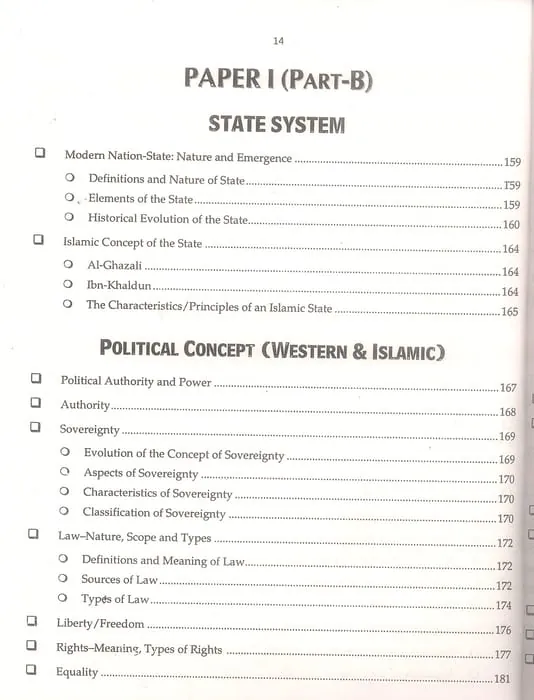
Paper I — Part B: State System, Political Concepts, Comparative Politics & Institutions
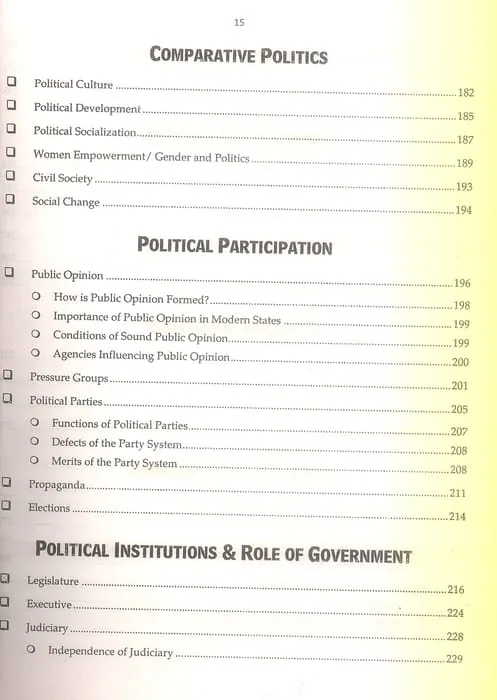
The modern nation-state and the Islamic concept of the state; political authority, sovereignty, law, liberty, rights and equality (Western and Islamic perspectives); comparative politics (political culture, development, socialisation, women's empowerment, civil society); political participation (public opinion, pressure groups, political parties, elections); and the legislature, executive and judiciary as institutions of government.
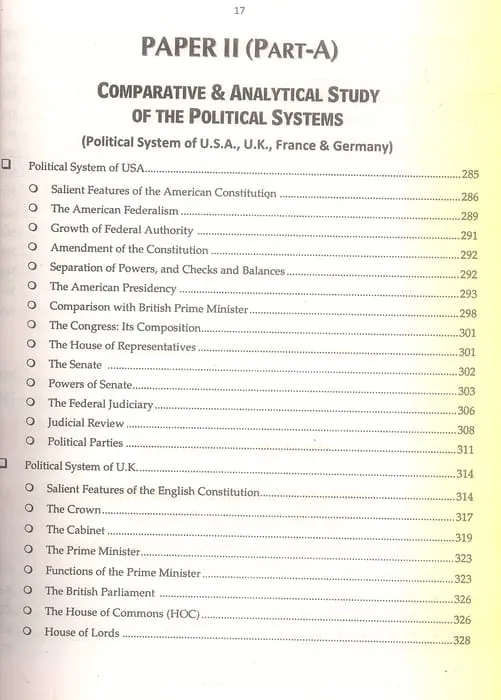
Paper II — Comparative & Analytical Study of Political Systems
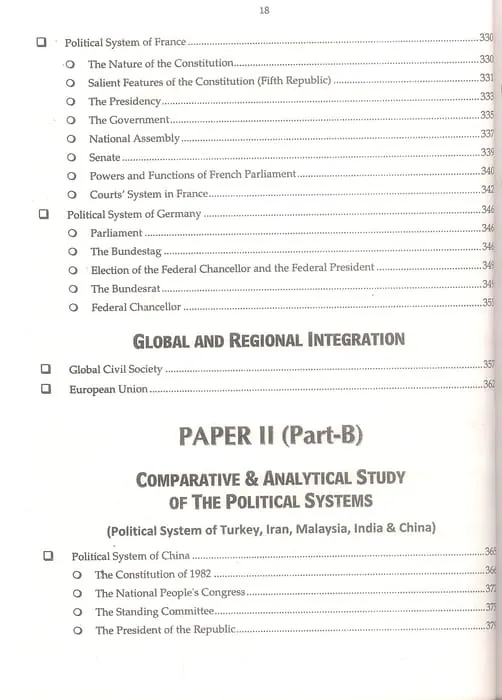
Part A: the political systems of the USA, UK, France and Germany — constitutions, federalism, the presidency/premiership, parliaments, judiciaries and party systems of each — plus global and regional integration through global civil society and the European Union.
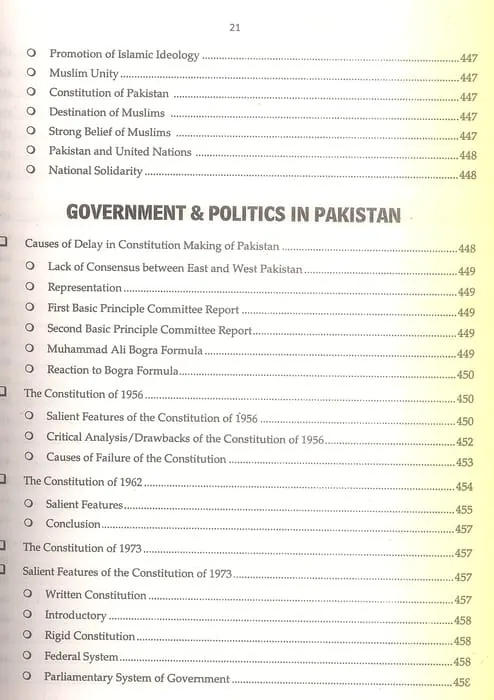
Part B: the political systems of China, Turkey, Iran, Malaysia and India, followed by a full section on Government & Politics in Pakistan — the delay in constitution-making, the Basic Principles Committee reports, the Muhammad Ali Bogra Formula, and the Constitutions of 1956, 1962 and 1973 with their salient features, including the 1973 Constitution's federal and parliamentary structure.
The full table of contents — every thinker, topic and page number, exactly as printed — is shown below:
Who this is for
CSS and PMS candidates who have chosen Political Science as an optional subject, and PPSC candidates who need the same syllabus, will find every topic examiners have historically asked about in one compiled volume.
Using it for CSS and PMS 2027-28
Political Science is a 200-mark optional subject in CSS, examined in Paper I and Paper II, and this book follows both papers of the FPSC syllabus. PMS and PPSC candidates should match the chapters with the syllabus advertised for their year. FPSC’s advance schedule puts the CSS 2027 written exam from late January 2027, after the MCQ-based preliminary test, and CSS 2028 follows a year later; always confirm dates and any syllabus notice on fpsc.gov.pk.
Inside the book — contents and sample pages