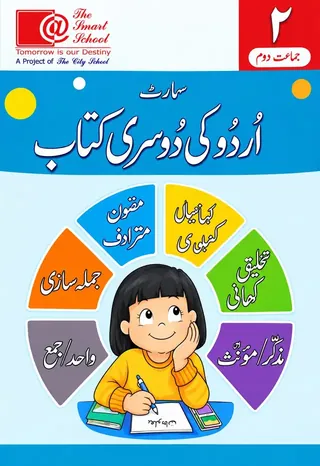
The Smart School Class 2 – Smart Urdu ki Doosri Kitab (2027-28)
The Smart School (A Project of The City School)
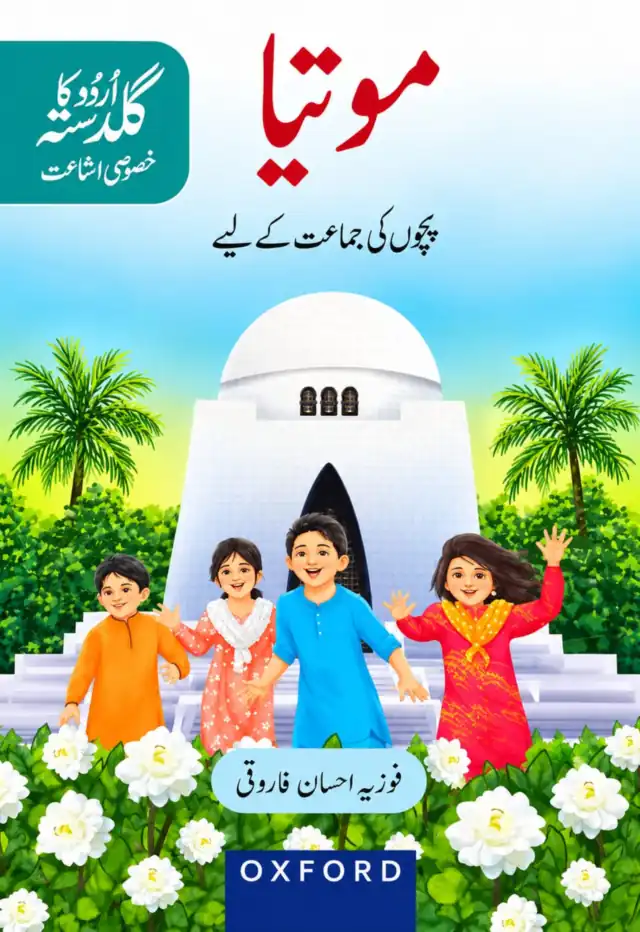
Motia, Urdu ka Guldasta (special edition) for Class 1 by Fauzia Ehsan Farooqi (Oxford University Press), on the LACAS Class 1 list for session 2027-28: a first-term qaida and 15 lessons across three terms.
On the LACAS Class 1 book list — see the full LACAS Class 1 book pack and booksMotia (موتیا, "jasmine") is the Class 1 Urdu book on the LACAS Class 1 list on this site. It is part of Oxford's Urdu ka Guldasta special edition, written by Fauzia Ehsan Farooqi. The book is organised by term: a first-term qaida that teaches the letters and how to join them, then fifteen lessons of poems, stories and everyday topics over the second and third terms. This page is written for the 2027-28 session, with the Urdu lesson titles also given in English so that every parent can follow.
Exams Book House, Shop Number 4, Al Fazal Market, Urdu Bazar, Lahore, supplies it with cash on delivery across Pakistan and delivery to the Gulf countries.
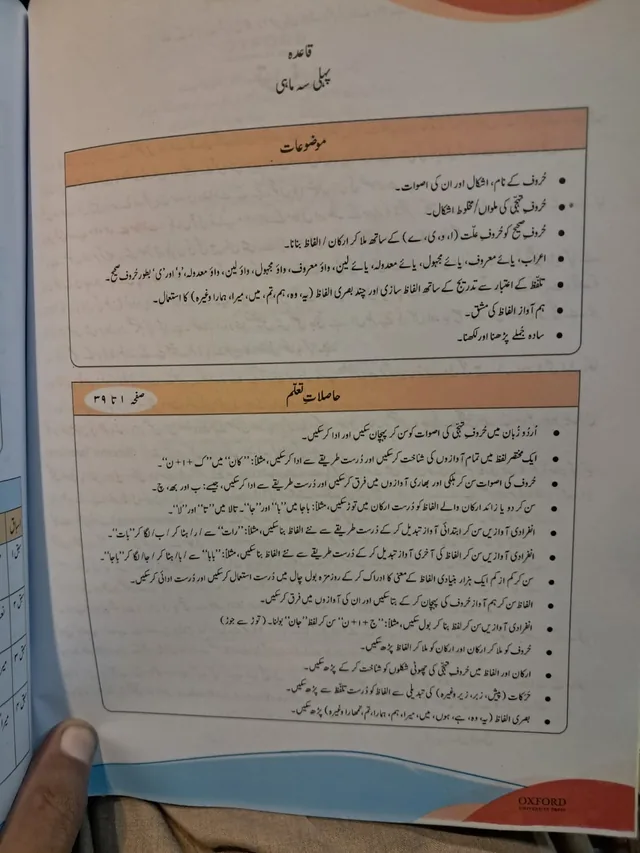
A six-year-old who starts Class 1 needs to do two things in Urdu in the same year: read and write the letters properly, and begin to enjoy short texts. Motia does both. The first term is a qaida: letter names, shapes and sounds, joined forms, the vowel signs and the first sentences. The second and third terms are the readers: a hamd, a naat, a self-introduction, a poem about the homeland and everyday topics such as home, school, health, pets, fruit, traffic signals and the rain.
A feature that sets the book apart is the table of learning outcomes. Each part of the book begins with a clear list of what a child should be able to do by the end of it, for example reading a short text correctly, telling similar sounds apart, writing letters in the right shape and speaking in simple sentences about a picture.
The first-term page lists seven topics. In plain English, the child learns:
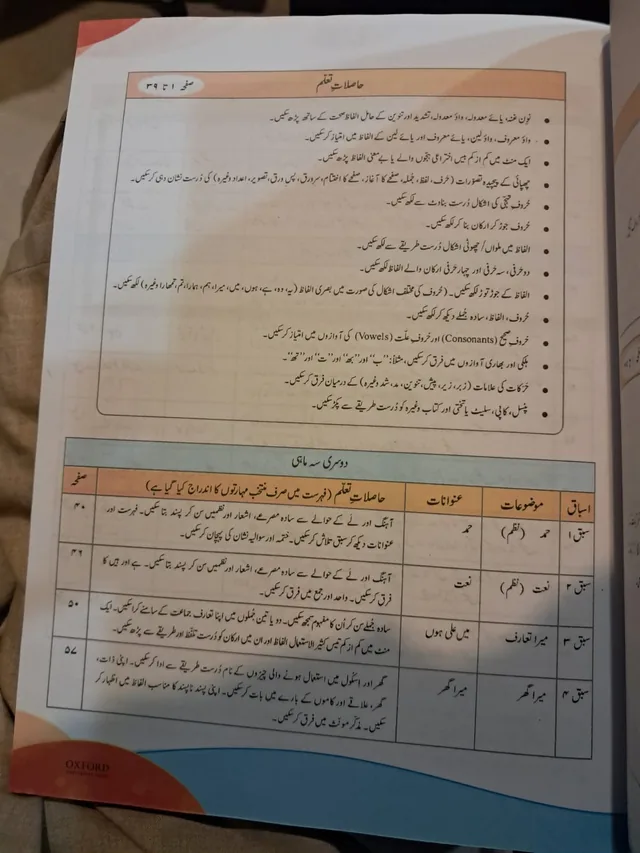
The outcomes include telling light and aspirated sounds apart (for example ب and بھ, ت and تھ), saying a word's sounds in order, changing the first or last sound to make a new word, and understanding and using at least a thousand basic everyday words by the end of the course.
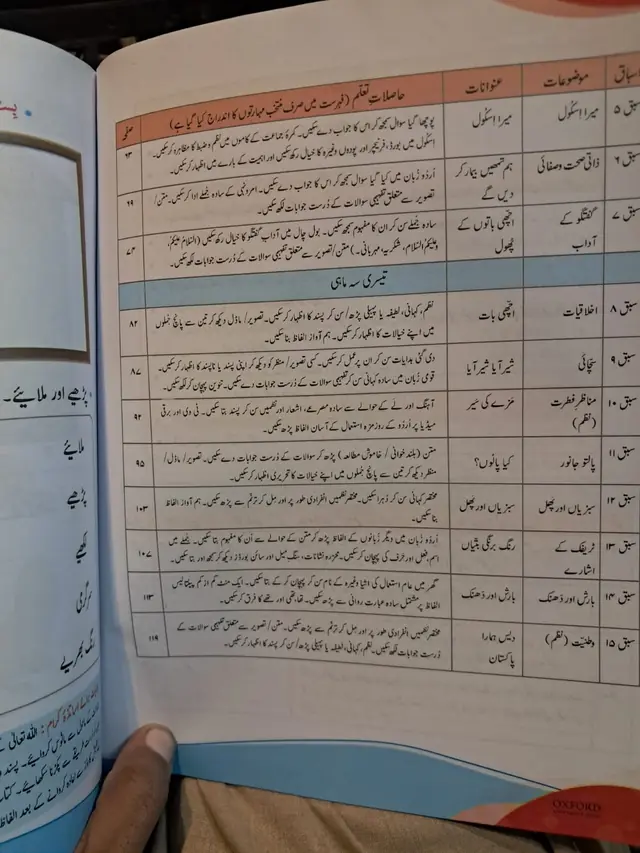
The book then gives fifteen lessons, listed here with the term, the topic in Urdu and its meaning in English. Page numbers show where each lesson starts.
| Lesson | Topic (Urdu) | In English | Term | Starts on page |
|---|---|---|---|---|
| 1 | حمد (نظم) | Hamd, a poem in praise of Allah | Second | 40 |
| 2 | نعت (نظم) | Naat, a poem in praise of the Prophet ﷺ | Second | 46 |
| 3 | میرا تعارف | My introduction ("I am Ali") | Second | 50 |
| 4 | میرا گھر | My home | Second | 57 |
| 5 | میرا اسکول | My school | Second | 63 |
| 6 | ذاتی صحت و صفائی | Personal health and cleanliness | Second | 69 |
| 7 | گفتگو کے آداب | Manners of conversation | Second | 74 |
| 8 | اخلاقیات | Good character | Third | 82 |
| 9 | سچائی | Truthfulness (the story "Sher aya, sher aya") | Third | 87 |
| 10 | مناظرِ فطرت (نظم) | Scenes of nature (a poem) | Third | 92 |
| 11 | پالتو جانور | Pet animals | Third | 95 |
| 12 | سبزیاں اور پھل | Vegetables and fruits | Third | 103 |
| 13 | ٹریفک کے اشارے | Traffic signals | Third | 107 |
| 14 | بارش اور دھنک | Rain and rainbow | Third | 113 |
| 15 | وطنیت (نظم) | Love of the homeland (a poem, "Dais hamara Pakistan") | Third | 119 |
Each lesson links Urdu reading with something a six-year-old already knows. A lesson on "my home" and "my school" builds speaking and describing skills. Lessons on health, manners and truthfulness build character. Lessons on pets, fruit and vegetables, traffic signals and rain build vocabulary about the world. The poems (the hamd, the naat, the nature poem and the poem about the homeland) are for listening, saying aloud and learning by heart.
It is for Class 1 children on the LACAS list, about six years old. It is used from the first week of the school year (the qaida) through to the third term. Parents who do not read much Urdu themselves can follow the English meanings above and let the child read to them.
On this site it is shown under LACAS Class 1. If your school's 2027-28 list names Motia – Urdu ka Guldasta for Class 1 (Oxford), this is the book. Send us your list on WhatsApp and we will tell you what we can get for you.
motia urdu ka guldasta class 1 · lacas class 1 urdu · oxford urdu class 1 motia · fauzia ehsan farooqi · class 1 urdu book lahore · موتیا اردو کا گلدستہ جماعت اول
Motia is the jasmine flower. It is the name of the book.
Fauzia Ehsan Farooqi (فوزیہ احسان فاروقی), as printed on the cover.
A first-term qaida (pages 1 to 39), then fifteen lessons over the second and third terms.
Yes. The book is in Urdu. The English meanings on this page are to help parents.
It is shown there on this site. Send your school list on WhatsApp so we can confirm.
Yes, all over Pakistan with cash on delivery, and to the Gulf countries. WhatsApp 0317 4846676.