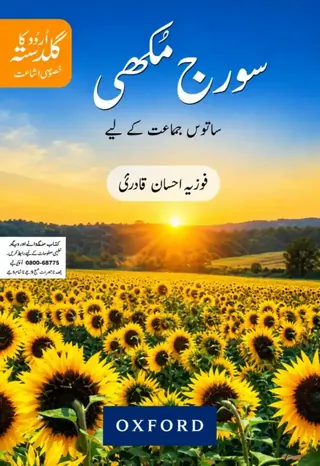
Class 7 Suraj Mukhi Urdu Ka Guldasta (Oxford 3rd Ed.) (2027-28)
Oxford University Press
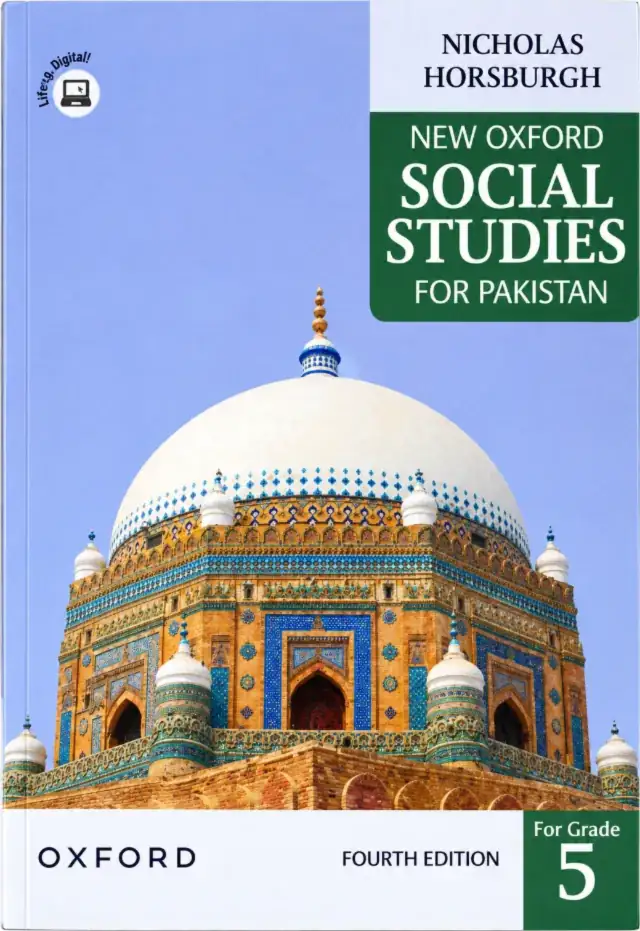
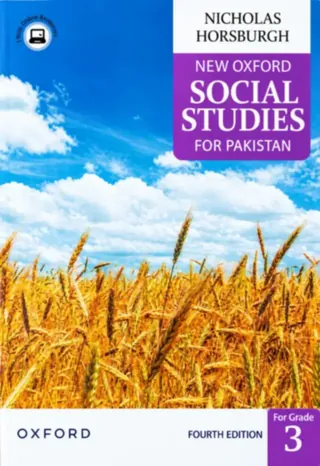
"New Oxford Social Studies for Pakistan 5 (Fourth Edition) by Nicholas Horsburgh, the senior primary social studies textbook for Class 5 for session 2027-28: four comprehensive units covering world geography, Pakistan geography, economics, citizenship, and history."
New Oxford Social Studies for Pakistan Book 5 (Fourth Edition) by Nicholas Horsburgh is the culminating primary social studies textbook for Class 5 (Grade 5) students across English-medium private schools in Pakistan. Published by Oxford University Press, it delivers an advanced primary syllabus covering global map reading, world climatic zones, polar exploration, the physical and economic geography of Pakistan, entrepreneurship, media literacy, constitutional governance, ancient civilizations, the Pakistan movement, and universal human rights. This page is written for the 2027-28 session.
Exams Book House, Shop Number 4, Al Fazal Market, Urdu Bazar, Lahore, supplies it with cash on delivery across Pakistan and delivery to the Gulf countries.
New Oxford Social Studies for Pakistan Book 5 serves as the senior capstone of Nicholas Horsburgh's celebrated primary social studies series. Designed for nine to eleven-year-old pupils preparing for middle school transitions, Book 5 challenges young minds with sophisticated cartographic techniques, physical geography systems, macroeconomic fundamentals, and in-depth historical analysis of the subcontinent.
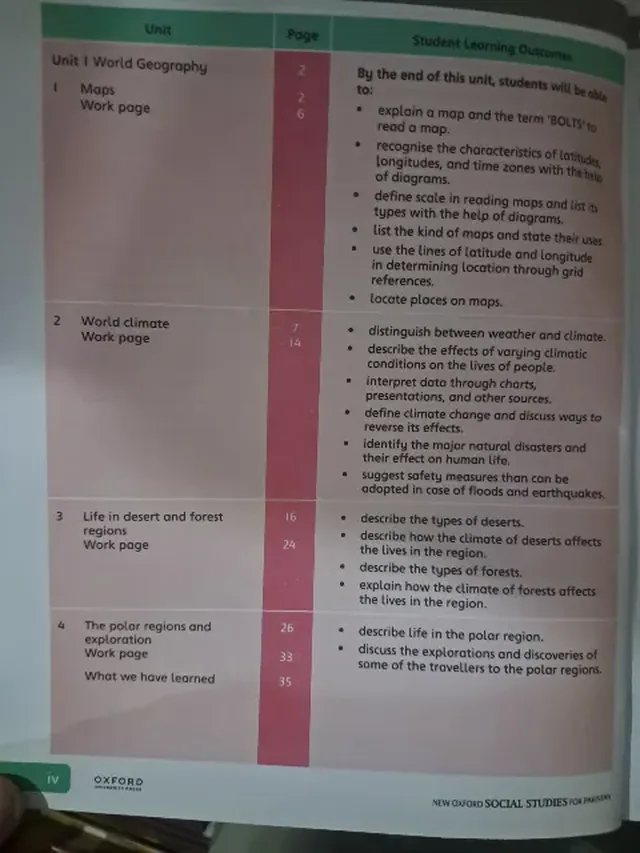
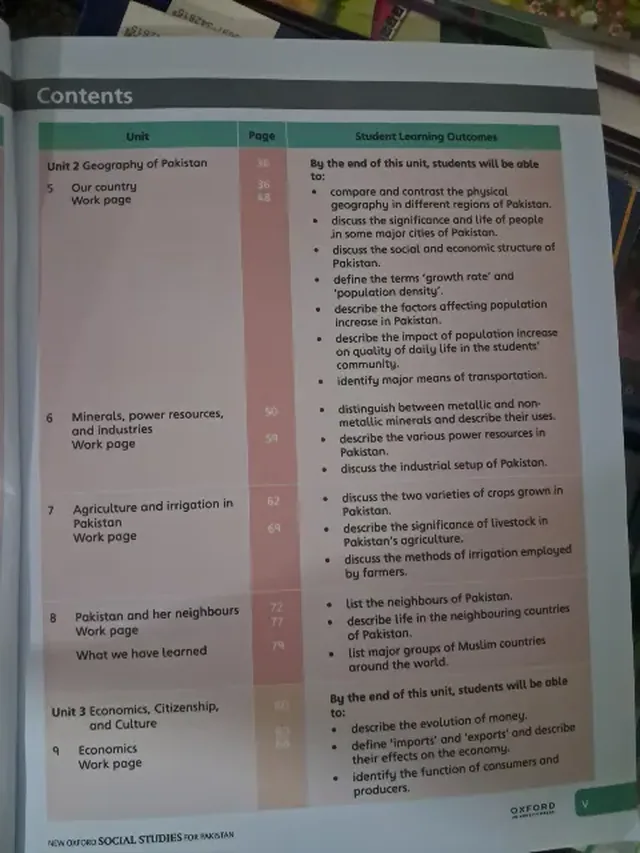
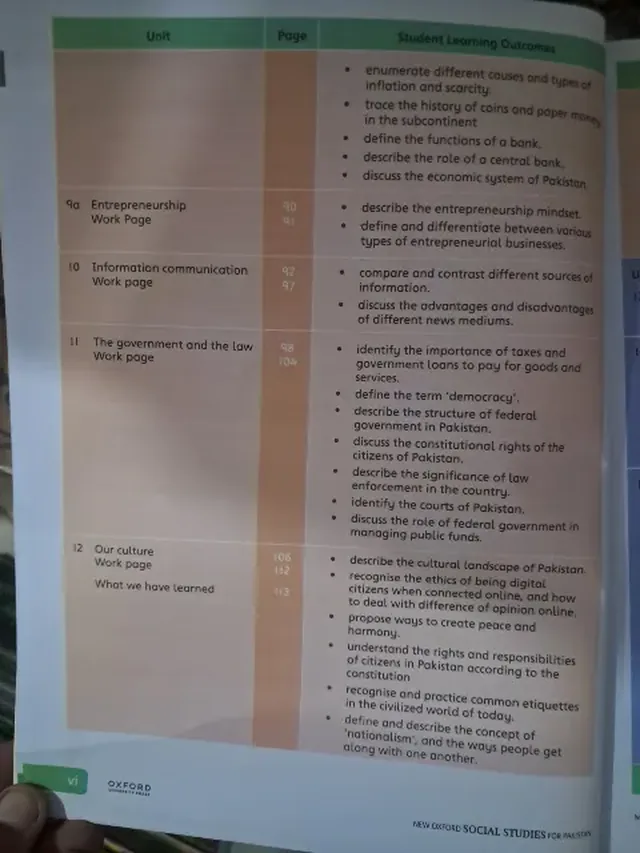
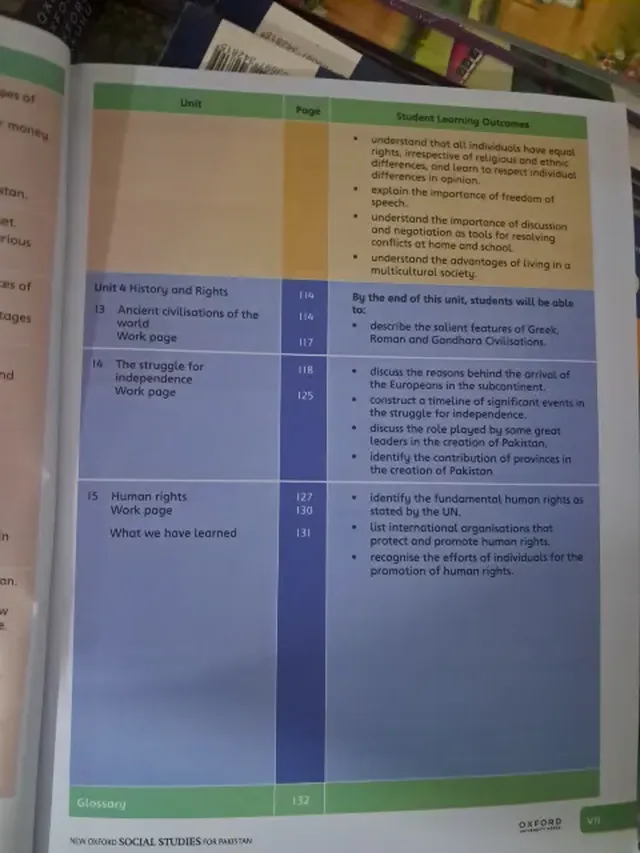
The curriculum is structured across four rigorous units. Unit 1 (World Geography) teaches advanced map reading through the 'BOLTS' acronym (Border, Orientation, Legend, Title, Scale), lines of latitude and longitude, global time zones, world climate patterns, desert and rainforest biomes, and the history of polar expeditions. Unit 2 (Geography of Pakistan) examines the physical regions, mineral wealth, power resources, heavy industries, agricultural canal networks, and geopolitical relationships with neighboring Muslim and South Asian nations. Unit 3 (Economics, Citizenship, and Culture) introduces the banking system, currency evolution, entrepreneurship mindsets, mass media analysis, democratic governance, constitutional rights, and Pakistani cultural heritage. Unit 4 (History and Rights) explores the legacy of Greek, Roman, and Gandhara civilizations, the British colonial period, the Pakistan independence struggle, and United Nations human rights declarations.
The table below transcribes every unit, lesson title, dedicated work page, summary review, and reference page directly from the four printed contents pages photographed from the Fourth Edition book.
| Unit No. | Unit Title / Lesson Title | Page |
|---|---|---|
| Unit 1 | World Geography | 2 |
| Lesson 1 | Maps | 2 |
| — | Work page | 6 |
| Lesson 2 | World climate | 7 |
| — | Work page | 14 |
| Lesson 3 | Life in desert and forest regions | 16 |
| — | Work page | 24 |
| Lesson 4 | The polar regions and exploration | 26 |
| — | Work page | 33 |
| Review | What we have learned | 35 |
| Unit 2 | Geography of Pakistan | 36 |
| Lesson 5 | Our country | 36 |
| — | Work page | 48 |
| Lesson 6 | Minerals, power resources, and industries | 50 |
| — | Work page | 59 |
| Lesson 7 | Agriculture and irrigation in Pakistan | 62 |
| — | Work page | 69 |
| Lesson 8 | Pakistan and her neighbours | 72 |
| — | Work page | 77 |
| Review | What we have learned | 79 |
| Unit 3 | Economics, Citizenship, and Culture | 80 |
| Lesson 9 | Economics | 80 |
| — | Work page | 88 |
| Lesson 9a | Entrepreneurship | 90 |
| — | Work page | 91 |
| Lesson 10 | Information communication | 92 |
| — | Work page | 97 |
| Lesson 11 | The government and the law | 98 |
| — | Work page | 104 |
| Lesson 12 | Our culture | 106 |
| — | Work page | 112 |
| Review | What we have learned | 113 |
| Unit 4 | History and Rights | 114 |
| Lesson 13 | Ancient civilisations of the world | 114 |
| — | Work page | 117 |
| Lesson 14 | The struggle for independence | 118 |
| — | Work page | 125 |
| Lesson 15 | Human rights | 127 |
| — | Work page | 130 |
| Review | What we have learned | 131 |
| Reference | Glossary | 132 |
In Unit 1, Class 5 students master the 'BOLTS' cartographic system, calculate time zone differences using international lines of longitude, and study equatorial versus polar climates. Nicholas Horsburgh includes accounts of historic polar explorations, helping students appreciate scientific bravery and extreme physical environments.
Unit 2 provides an exhaustive survey of Pakistan's real economy. Students examine coal, natural gas, limestone, and copper extraction; study hydroelectric, thermal, and nuclear power installations; trace the Indus Basin irrigation canal network; and analyze the contribution of cotton textiles, surgical goods, and leather sports manufacturing to national export earnings.
Units 3 and 4 link contemporary citizenship with historical heritage. Students learn about the three organs of government (Executive, Legislature, Judiciary), the rule of law, and digital citizenship ethics. They also explore entrepreneurial thinking—learning how creative ideas turn into enterprises. In history, pupils examine Gandharan art, Greek and Roman architectural models, the 1857 War of Independence, the political leadership of Quaid-e-Azam, and fundamental rights protected by the 1973 Constitution of Pakistan and the Universal Declaration of Human Rights.
This textbook is prescribed for Class 5 (Grade 5) students aged 9 to 11 years in English-medium private schools, army public schools, and premier educational networks across Pakistan.
Schools typically divide the academic year into two semesters. Term 1 (April to September) focuses on World Geography and Pakistan Geography (Units 1 and 2), covering world biomes, polar exploration, Pakistani industries, and canal irrigation. Term 2 (October to March) covers Economics, Governance, Independence History, and Human Rights (Units 3 and 4) in preparation for senior primary exams and middle school entry tests.
Yes. If your school's prescribed booklist for Class 5 requires Nicholas Horsburgh's New Oxford Social Studies for Pakistan Book 5 (Fourth Edition), this is the authentic, officially adopted textbook for the 2027-28 academic session. Oxford University Press maintains this Fourth Edition as the current syllabus standard. You can verify your school's requirements by sending a photo of your booklist to our Urdu Bazar bookshop on WhatsApp at 0317 4846676.
new oxford social studies 5 · nicholas horsburgh class 5 social studies · oxford social studies grade 5 fourth edition · class 5 sst book oxford · urdu bazar lahore school books · primary school textbooks lahore
Yes. New Oxford Social Studies for Pakistan Book 5 Fourth Edition is fully valid and recommended for Class 5 students during the 2027-28 academic session.
The book includes 4 units covering: World Geography (maps, climate, deserts, polar exploration), Geography of Pakistan (minerals, power, agriculture, neighbors), Economics, Citizenship, and Culture (banking, entrepreneurship, media, government), and History and Rights (ancient civilizations, independence struggle, human rights), totaling 132 pages.
Yes. Lesson 9a (pages 90-91) introduces entrepreneurship concepts and business mindsets, while Lesson 10 (pages 92-97) teaches information communication and news media evaluation.
If your school's 2027-28 booklist lists New Oxford Social Studies Book 5 Fourth Edition by Nicholas Horsburgh, this is the exact textbook prescribed. You can verify your list via WhatsApp on 0317 4846676.
Yes, all over Pakistan with cash on delivery, and to the Gulf countries. Contact Exams Book House via WhatsApp at 0317 4846676 to place an order.\n