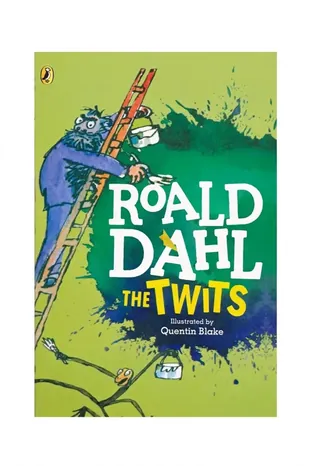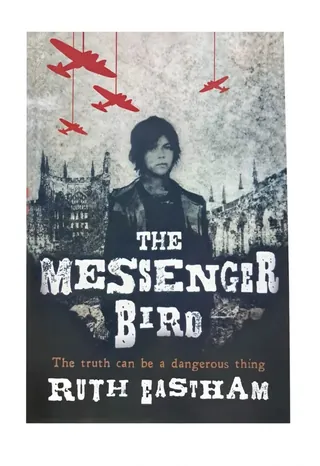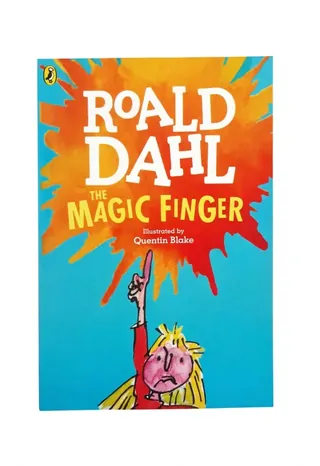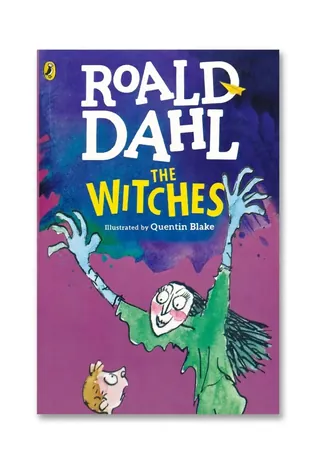
The Witches – Roald Dahl, Illustrated by Quentin Blake (2027-28)
Puffin (Penguin Random House)
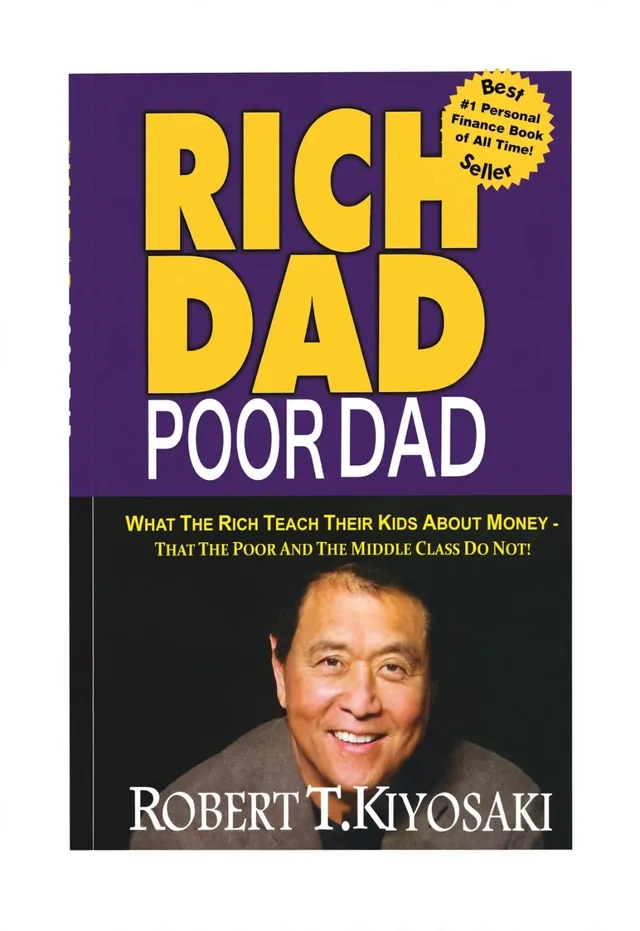
Rich Dad Poor Dad by Robert T. Kiyosaki, for 2027-28 readers: a personal finance and self-help book with six money lessons, contents with page numbers and notes for students and parents.
Rich Dad Poor Dad by Robert T. Kiyosaki is one of the best-known personal finance books in English. It is not a novel, although we shelve it with our English reading books: it is a self-help book that uses the story of two "dads", one rich and one poor, to explain how people think about money. It has a short introduction, six lessons, three more chapters and final thoughts, and it is useful reading for older students, college students and parents in the 2027-28 session.
Exams Book House, Shop Number 4, Al Fazal Market, Urdu Bazar, Lahore, supplies it with cash on delivery across Pakistan and delivery to the Gulf countries.
The author tells the story of his boyhood with two father figures. One was his real father, an educated man with a good job who struggled with money all his life. The other, whom he calls his rich dad, was the father of his best friend, a man who left school early but built businesses and became wealthy. The book compares what each of them taught him.
The central idea is that being good at your job is not the same as being good with money. The author says that school teaches us to work for money but not how to make money work for us, and that people who understand money think about assets (things that put money in your pocket) and liabilities (things that take money out of it) in a different way. The book encourages readers to learn about investing, business and taxes, to take responsibility for their own financial education, and to start early.
Not everyone agrees with all of Kiyosaki's advice, and it is wise to treat it as a source of ideas, not as a plan to follow blindly. Some of the examples come from the United States, so a reader in Pakistan will need to adapt them to local rules and conditions. We offer this page as a guide to what is in the book, and not as financial advice.
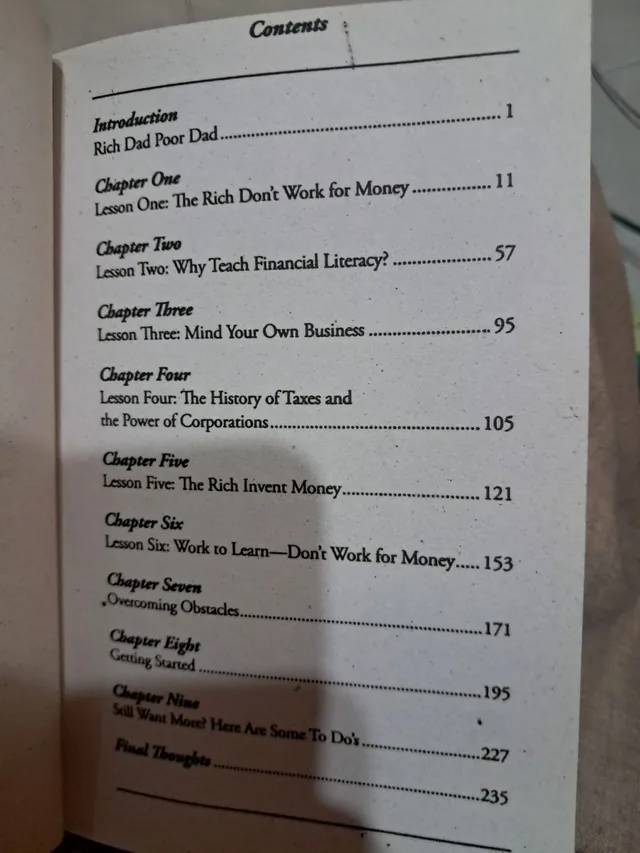
| Part | Title | Page |
|---|---|---|
| Introduction | Rich Dad Poor Dad | 1 |
| Chapter One | Lesson One: The Rich Don't Work for Money | 11 |
| Chapter Two | Lesson Two: Why Teach Financial Literacy? | 57 |
| Chapter Three | Lesson Three: Mind Your Own Business | 95 |
| Chapter Four | Lesson Four: The History of Taxes and the Power of Corporations | 105 |
| Chapter Five | Lesson Five: The Rich Invent Money | 121 |
| Chapter Six | Lesson Six: Work to Learn – Don't Work for Money | 153 |
| Chapter Seven | Overcoming Obstacles | 171 |
| Chapter Eight | Getting Started | 195 |
| Chapter Nine | Still Want More? Here Are Some To Do's | 227 |
| Final Thoughts | 235 |
The book is written in simple language, so it reaches readers who would not pick up a textbook on finance. It also starts a conversation: whether or not you agree with each point, thinking about them makes you more careful about your own money. And it is short enough to finish in a few evenings, which makes it a good starting point before moving on to more detailed books.
A sensible way to read it is with a pen and a notebook. Write down each idea, then ask yourself two questions: "Does this apply in Pakistan?" and "What would I need to check before acting on it?"
Read one lesson at a time and then wait a day before starting the next, so you can think about it. Talk about the ideas with a parent or teacher. Do not make investment decisions based on a single book. If you are planning to invest or start a business, get advice from a qualified local adviser who knows the rules in Pakistan.
For general reading and personal development in the 2027-28 session, yes. It is not a school textbook and is not on any exam syllabus, so it will suit students and adults who want to read for their own benefit. If you are looking for books to prepare for CSS, PMS or college exams, see our exam sections or send us your list on WhatsApp.
rich dad poor dad robert kiyosaki · rich dad poor dad book price in pakistan · rich dad poor dad urdu bazar lahore · personal finance book english · self help books lahore · books for 2027-28 reading · رچ ڈیڈ پور ڈیڈ
No. It is a personal finance and self-help book that tells stories from the author's life. We list it with our English reading books for convenience.
It is good general reading for 2027-28, but it is not a syllabus or textbook title.
Older students, college students, parents and young adults who want to learn the basics of money thinking.
Some ideas are general, and others come from United States examples. Check local rules and take professional advice before acting.
Yes, all over Pakistan with cash on delivery, and to the Gulf countries. WhatsApp 0317 4846676.